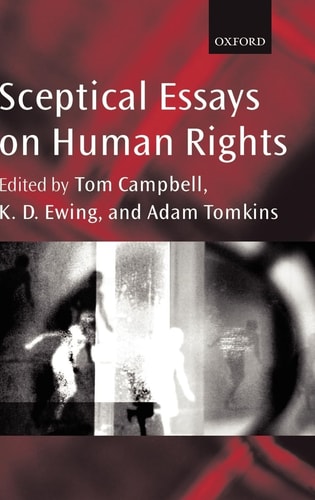
Sceptical Essays on Human Rights
0
0
As an Amazon Associate and affiliate partner, Menrva Books earns from qualifying purchases. Learn more
Author Description
Britain's Human Rights Act 1998 is the latest in a wave of legislative and constitutional instruments that have been passed in a number of countries (including Canada, New Zealand and South Africa) and which put human rights at the top of the public law agenda. For the most part these instruments are widely welcomed by senior judges and by academic and practicing lawyers, many of whom will have campaigned for their introduction. There are, however, very considerable doubts about the wisdom of these developments within the democratic tradition of government which remain unanswered. This collection of 20 essays written by an array of internationally prestigious scholars explores these reservations.All the contributors endorse the importance of human rights within any democratic system of government, but question whether the primary responsibility for the articulation of these rights ought to be taken away from the normal political processes of representative government; they also consider the constitutional implications of doing so. Specifically, the extensive shift of political authority to the judiciary which is involved in Britain's Human Rights Act is critically examined and other ways of specifying and promoting human rights in more democratic forums are considered. Particular attention is paid to the priority which should be given to economic and social rights within the new constitutional settlement. Overseas contributions, ranging from Eastern Europe to South Africa, via North America and Australasia, illustrate the pitfalls of importing other constitutional models.Written throughout in an engaging and accessible style, this book is essential reading for all those with an interest in law or politics.
Menrva's Summary
THE THESIS
This collection of essays investigates whether the judicialization of human rights through legislative instruments like Britain's Human Rights Act 1998 undermines the democratic process of representative government. The authors, including Adam Tomkins, K. D. Ewing, and Tom Campbell, bring together a group of internationally recognized scholars to challenge the prevailing consensus among legal professionals. By analyzing the constitutional implications of shifting political authority from elected bodies to the judiciary, the text argues for a re-evaluation of how rights are articulated and protected within a democratic framework.
THE SCOPE MAP
What You Will Find
- Comparative analysis of constitutional models in Eastern Europe, South Africa, North America, and Australasia.
- Critical examination of the shift of political authority from legislatures to the judiciary.
- Discussion on the prioritization of economic and social rights within modern constitutional settlements.
- Theoretical exploration of alternative democratic forums for the promotion of human rights.
THE AUTHORITY PERSPECTIVE
Legal scholars and political scientists frequently cite this work as a significant counter-narrative to the standard support for judicialized human rights frameworks. The text is noted for its academic rigor while remaining accessible to students and practitioners interested in the intersection of law and democratic theory.
Page Count:
466
Publication Date:
2002-02-14
Publisher:
Oxford University Press
ISBN-10:
0199246696
ISBN-13:
9780199246694
Politics
Civil Rights
Law
Constitutional Law
Human rights
Community Tags
Similar Books