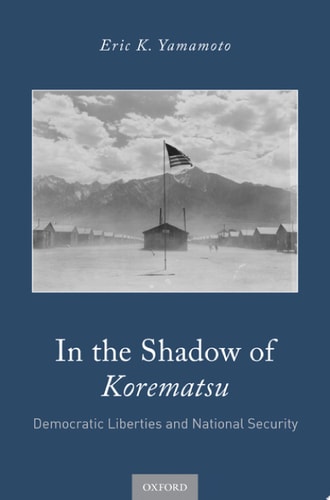
In the Shadow of Korematsu
0
0
As an Amazon Associate and affiliate partner, Menrva Books earns from qualifying purchases. Learn more
Author Description
The National Security And Civil Liberties Tensions Of The World War Ii Mass Incarceration Link 9/11 And The 2015 Paris-san Bernardino Attacks To The Trump Era In America - An Era Darkened By Accelerating Discrimination Against And Intimidation Of Those Asserting Rights Of Freedom Of Religion, Association And Speech, And An Era Marked By Increasingly Volatile Protests. This Book Discusses The Broad Civil Liberties Challenges Posed By These Past-into-the-future Linkages Highlighting Pressing Questions About The Significance Of Judicial Independence For A Constitutional Democracy Committed Both To Security And To The Rule Of Law. What Will Happen When Those Profiled, Detained, Harassed, Or Discriminated Against Under The Mantle Of National Security Turn To The Courts For Legal Protection? How Will The U.s. Courts Respond To The Need To Protect Both Society And Fundamental Democratic Values Of Our Political Process? Will Courts Fall Passively In Line With The Elective Branches, As They Did In Korematsu V. United States, Or Serve As The Guardian Of The Bill Of Rights, Scrutinizing Claims Of Pressing Public Necessity As Justification For Curtailing Fundamental Liberties? These Queries Paint Three Pictures Portrayed In This Book. First, They Portray The Present-day Significance Of The Supreme Court's Partially Discredited, Yet Never Overruled, 1944 Decision Upholding The Constitutional Validity Of The Mass Japanese American Exclusion Leading To Indefinite Incarceration - A Decision Later Found To Be Driven By The Government's Presentation Of Intentional Falsehoods And Willful Historical Inaccuracies To The Court. Second, The Queries Implicate Prospects For Judicial Independence In Adjudging Harassment, Exclusion, Incarceration Disputes In Contemporary America And Beyond. Third, And Even More Broadly For Security And Liberty Controversies, The Queries Engage The American Populace In Shaping Law And Policy At The Ground Level By Placing The Courts' Legitimacy On Center Stage
Menrva's Summary
THE THESIS
This book investigates whether the United States judiciary will uphold constitutional protections for civil liberties during national security crises or defer to executive authority, as seen in the historical precedent of Korematsu v. United States. Eric K. Yamamoto, a professor of law and expert in social justice, utilizes historical analysis and contemporary legal theory to examine the enduring impact of the Japanese American incarceration during World War II. He argues that the government's past reliance on falsehoods to justify civil rights violations remains a critical warning for modern judicial independence. The work serves as a framework for evaluating how courts balance public security against the fundamental rights of individuals in an era of heightened political volatility.
THE SCOPE MAP
What You Will Find
- Analysis of the 1944 Korematsu v. United States Supreme Court decision and its subsequent discrediting.
- Legal frameworks for assessing government claims of national security necessity.
- Comparative studies linking World War II-era policies to post-9/11 and contemporary political climates.
- Discussions on the role of public advocacy in shaping judicial legitimacy.
Scope Limits
- The text does not provide an exhaustive history of all civil rights litigation in the 20th century.
- It does not offer a comprehensive policy manual for specific legislative reform.
THE AUTHORITY PERSPECTIVE
Legal scholars and practitioners identify this work as a significant contribution to the discourse on judicial independence and the limits of executive power. Readers frequently note the academic density of the prose, which is intended for those with an interest in constitutional law and civil liberties.
Page Count:
352
Publication Date:
2018-01-01
Publisher:
Oxford University Press
ISBN-10:
0190878967
ISBN-13:
9780190878962
History
Human rights
Civil Rights
Constitutional Law
Law
Community Tags
Similar Books