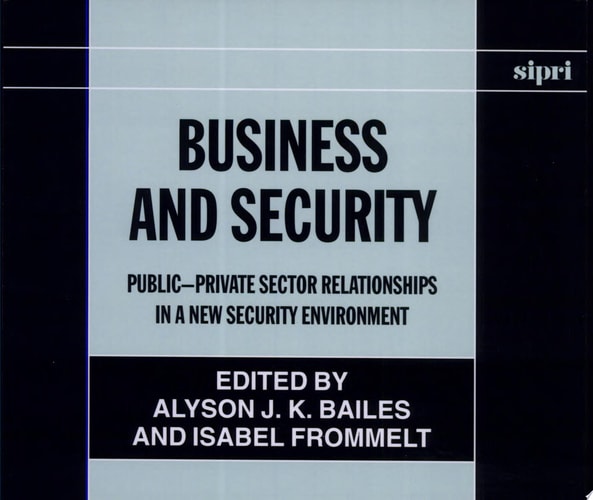
Business and Security: Public-Private Sector Relationships in a New Security Environment
0
0
As an Amazon Associate and affiliate partner, Menrva Books earns from qualifying purchases. Learn more
Author Description
The private business sector suffered both directly and indirectly from the terrorist strikes of September 11th. Many business workers perished in the New York WOrld Trade Center, and the insurance, transport, and tourism industries were hard hit by the aftermath. Restrictions imposed in the name of security made business travel and the movement of goods more complicated. The private sector was called upon to support the fight against terrorism actively with tougher controls on money transfers and onthe export of dangerous materials and technologies. These events offered a striking case of the growing interdependence of the private and public sectors in takling present-day security challenges. The impact of the private sector, for good or ill, in areas of conflict has long been recognized. Private business is at the centre of the latest concerns over the vulnerability of crucial infrastructures, including energy supply. Systematic public-private sector consultation and partnership are needed to tackle these problems, but neither the principles nor comprehensive mechanisms for such cooperation have yet been identified. This book brings together reflections on general and specific aspects of public-private sector interaction, from a variety of experts in business, government, international organizations and the academic world. For completeness and balance, it also inquires into the costs of security and includes perspectives from Africa and the Arab World. It offers new reference material to help in the further exploration of this important subject.
Menrva's Summary
THE THESIS
This monograph investigates the evolving interdependence between the private business sector and public government entities in addressing contemporary global security challenges. The authors, Alyson J. K. Bailes and Isabel Frommelt, compile research from a diverse group of experts across government, academia, and international organizations to analyze how security threats—specifically post-9/11—have necessitated new frameworks for public-private cooperation. The text argues that while the private sector is increasingly central to infrastructure protection and conflict mitigation, formal mechanisms for collaboration remain underdeveloped and require systematic definition.
THE SCOPE MAP
What You Will Find
- Analysis of the economic impact of security restrictions on global trade, tourism, and transport.
- Examination of the role of private enterprise in monitoring money transfers and the export of sensitive technologies.
- Case studies and perspectives from diverse regions, including Africa and the Arab World.
- Discussion on the vulnerability of critical infrastructures, such as energy supply, to modern security threats.
THE AUTHORITY PERSPECTIVE
Experts identify this work as a foundational text for understanding the intersection of corporate responsibility and national security policy. Readers frequently note the academic density of the prose and its utility as a reference for policymakers and international relations scholars.
Page Count:
344
Publication Date:
2004-07-08
Publisher:
Oxford University Press
ISBN-10:
0199274509
ISBN-13:
9780199274505
Economics
Business
International business
International relations
Security
Community Tags
Similar Books