Japan and the Shackles of the Past: What Everyone Needs to Know
0
0
As an Amazon Associate and affiliate partner, Menrva Books earns from qualifying purchases. Learn more
Author Description
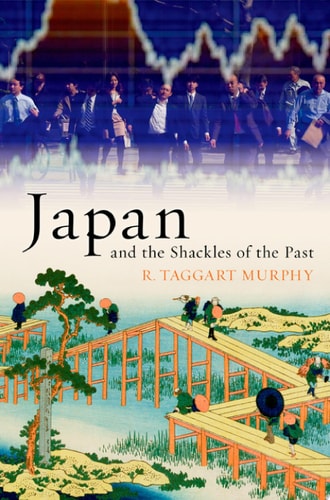
Japan is one of the world's wealthiest and most technologically advanced nations, and its rapid ascent to global power status after 1853 remains one of the most remarkable stories in modern world history. Yet it has not been an easy path; military catastrophe, political atrophy, and economic upheavals have made regular appearances from the feudal era to the present. Today, Japan is seen as a has-been with a sluggish economy, an aging population, dysfunctional politics, and a business landscape dominated by yesterday's champions. Though it is supposed to be America's strongest ally in the Asia-Pacific region, it has almost entirely disappeared from the American radar screen. In Japan and the Shackles of the Past, R. Taggart Murphy places the current troubles of Japan in a sweeping historical context, moving deftly from early feudal times to the modern age that began with the Meiji Restoration. Combining fascinating analyses of Japanese culture and society over the centuries with hard-headed accounts of Japan's numerous political regimes, Murphy not only reshapes our understanding of Japanese history, but of Japan's place in the contemporary world. He concedes that Japan has indeed been out of sight and out of mind in recent decades, but contends that this is already changing. Political and economic developments in Japan today risk upheaval in the pivotal arena of Northeast Asia, inviting comparisons with Europe on the eve of the First World War. America's half-completed effort to remake Japan in the late 1940s is unraveling, and the American foreign policy and defense establishment is directly culpable for what has happened. The one apparent exception to Japan's malaise is the vitality of its pop culture, but it's actually no exception at all; rather, it provides critical clues to what is going on now. With insights into everything from Japan's politics and economics to the texture of daily life, gender relations, the changing business landscape, and popular and high
Menrva's Summary
THE THESIS
This work investigates the historical and structural factors that have contributed to Japan's contemporary political and economic stagnation while assessing its evolving role in the global order. R. Taggart Murphy, an expert on Japanese political economy, utilizes a broad historical framework to analyze the nation's trajectory from the feudal era through the Meiji Restoration to the present day. He argues that current domestic challenges and shifting geopolitical dynamics in Northeast Asia are rooted in historical precedents and the incomplete legacy of post-World War II American influence. The text posits that Japan's perceived decline is a complex phenomenon that demands a reevaluation of its strategic importance to the United States and the international community.
THE SCOPE MAP
What You Will Find
- A comprehensive historical survey of Japanese political regimes and economic development.
- Analysis of the impact of the Meiji Restoration on modern Japanese statehood.
- Examination of the intersection between Japanese pop culture and societal malaise.
- Critique of American foreign policy and defense strategies regarding the Asia-Pacific region.
Scope Limits
- The text does not provide a granular, day-to-day economic forecast for the Japanese market.
- It does not offer a comprehensive biography of individual political leaders, focusing instead on systemic trends.
THE AUTHORITY PERSPECTIVE
Experts and readers frequently note the academic density and analytical rigor of Murphy's prose, which provides a sophisticated counter-narrative to common perceptions of Japanese decline. The book is widely regarded as a foundational text for those seeking to understand the intersection of historical legacy and contemporary geopolitical instability in Northeast Asia.
Page Count:
472
Publication Date:
2014-01-01
Publisher:
Oxford University Press
ISBN-10:
0190213256
ISBN-13:
9780190213251
History
Economics
Japan
International business
Asian History
Modern History
Asian Studies
Customs & Traditions
International relations
Comparative Politics
Community Tags
Similar Books