Ayurveda Made Modern
0
0
As an Amazon Associate and affiliate partner, Menrva Books earns from qualifying purchases. Learn more
Author Description
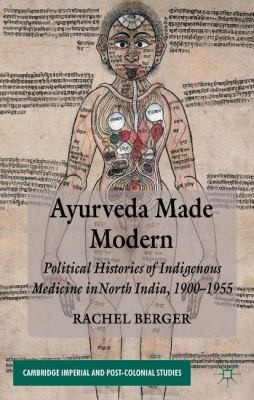
This book explores the ways in which Ayurveda, the oldest medical tradition of the Indian subcontinent, was transformed from a composite of 'ancient' medical knowledge into a 'modern' medical system, suited to the demands posed by apparatuses of health developed in colonial India. It examines the shift between an entrenched colonial reticence to consider the Indigenous Medical Systems as legitimate scientific medicine, to a growing acceptance of Ayurvedic medicine following the First World War. Locating the moment of transition within the implementation of a dyarchic system of governance in 1919, the book argues that the revamping of the 'Medical Services' into an important new category of regional governance ushered in an era of health planning that considered curative and preventative medicine as key components of the 'health' of the population. As such, it illuminates the way in which conceptions of power, authority and agency were newly configured and consolidated as politics were revamped in the late colonial India.
Menrva's Summary
THE THESIS
This book investigates how Ayurveda transitioned from an ancient tradition to a modern medical system within the context of colonial India. It examines the historical shift from colonial skepticism towards indigenous medical systems to their increasing acceptance after World War I, particularly after the 1919 implementation of dyarchic governance. The work argues that the restructuring of medical services into regional governance fostered health planning that integrated curative and preventative medicine, thereby reconfiguring power dynamics and agency in late colonial India.
THE SCOPE MAP
- The transformation of Ayurveda into a modern medical system.
- The impact of colonial governance on indigenous medical traditions.
- The shift in acceptance of Ayurvedic medicine post-World War I.
- The role of health planning and governance in colonial India.
- Analysis of power, authority, and agency in late colonial India.
THE AUTHORITY PERSPECTIVE
The book positions itself as a critical examination of the historical forces that shaped modern medicine in colonial India, focusing on the integration and adaptation of Ayurvedic practices. It appears to offer a nuanced perspective on the interplay between indigenous knowledge systems and colonial administrative structures. The work is likely to appeal to scholars of South Asian history, medical history, and postcolonial studies seeking to understand the evolution of healthcare systems.
Page Count:
232
Publication Date:
2013-01-01
ISBN-10:
0230284558
ISBN-13:
9780230284555
Politics
Health
Non-Fiction
History
Public Health
MEDICAL History
Colonial India
Ayurveda
Community Tags
Similar Books