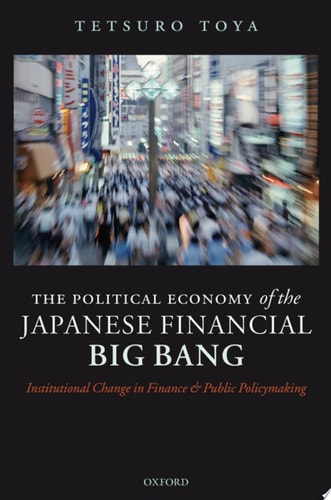
The Political Economy of the Japanese Financial Big Bang: Institutional Change in Finance and Public Policymaking
0
0
As an Amazon Associate and affiliate partner, Menrva Books earns from qualifying purchases. Learn more
Author Description
This book emphasizes change over continuity in Japanese policymaking. It argues that Japan's Big Bang financial reforms emerged out of a policymaking process that deviated radically from past patterns. Performance failures, scandals and fluidity in party politics led the Ministry of Finance to promote reforms that otherwise would have been opposed.
Menrva's Summary
THE THESIS
This book investigates the mechanisms of institutional change within the Japanese financial sector, specifically questioning how the 'Big Bang' reforms successfully bypassed traditional policymaking constraints. The late Tetsuro Toya utilizes a political economy framework to analyze the shift from historical continuity to radical reform. By examining the intersection of performance failures, systemic scandals, and party political fluidity, the author argues that these external pressures forced the Ministry of Finance to abandon its typical resistance to liberalization. The text provides a detailed account of how crisis-driven environments can alter long-standing bureaucratic behavior.
THE SCOPE MAP
What You Will Find
- Analysis of the Japanese 'Big Bang' financial reform period
- Examination of the Ministry of Finance's evolving policymaking strategies
- Case studies on the impact of financial scandals on legislative outcomes
- Theoretical framework for understanding institutional change in mature economies
THE AUTHORITY PERSPECTIVE
Experts recognize this work as a significant contribution to the study of Japanese political economy and bureaucratic reform. Readers frequently note the academic density of the prose, which provides a rigorous examination of the structural shifts in Japan's financial governance.
Page Count:
352
Publication Date:
2006-06-01
Publisher:
Oxford University Press
ISBN-10:
0199292396
ISBN-13:
9780199292394
Economics
Japan
Finance
Public Policy
Japanese History
Finance japan
Community Tags
Similar Books