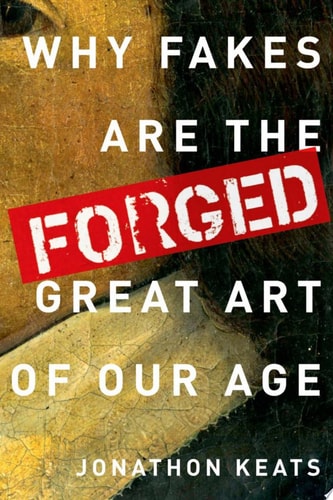
Forged: Why Fakes are the Great Art of Our Age
0
0
As an Amazon Associate and affiliate partner, Menrva Books earns from qualifying purchases. Learn more
Author Description
According to Vasari, the young Michelangelo often borrowed drawings of past masters, which he copied, returning his imitations to the owners and keeping originals. Half a millennium later, Andy Warhol made a game of "forging" the Mona Lisa, questioning the entire concept of originality.Forged explores art forgery from ancient times to the present. In chapters combining lively biography with insightful art criticism, Jonathon Keats profiles individual art forgers and connects their stories to broader themes about the role of forgeries in society. From the Renaissance master Andrea del Sarto who faked a Raphael masterpiece at the request of his Medici patrons, to the Vermeer counterfeiter Han van Meegeren who duped the avaricious Hermann Göring, to the frustrated British artist Eric Hebborn, who began forging to expose the ignorance of experts, art forgers have challenged "legitimate" art in their own time, breaching accepted practices and upsetting the status quo. They have also provocatively confronted many of the present-day cultural anxieties that are major themes in the arts. Keats uncovers what forgeries--and our reactions to them--reveal about changing conceptions of creativity, identity, authorship, integrity, authenticity, success, and how we assign value to works of art. The book concludes by looking at how artists today have appropriated many aspects of forgery through such practices as street-art stenciling and share-and-share-alike licensing, and how these open-source "copyleft" strategies have the potential to make legitimate art meaningful again. Forgery has been much discussed--and decried--as a crime. Forged is the first book to assess great forgeries as high art in their own right.
Menrva's Summary
THE THESIS
This book investigates the provocative proposition that art forgery should be recognized as a legitimate form of high art rather than merely a criminal act of deception. Author Jonathon Keats, an art critic and experimental philosopher, utilizes historical case studies and biographical profiles of notorious forgers to challenge traditional notions of authorship and authenticity. By examining the motivations of figures ranging from Renaissance masters to modern provocateurs, Keats argues that forgeries serve as a critical mirror for society's evolving anxieties regarding creativity and value.
THE SCOPE MAP
What You Will Find
- Historical analysis of forgery practices from the Renaissance to the contemporary era.
- Biographical profiles of significant forgers including Andrea del Sarto, Han van Meegeren, and Eric Hebborn.
- Examination of the intersection between art forgery and modern concepts like open-source licensing and street art.
- Critical inquiry into how cultural institutions assign value and define the boundaries of artistic integrity.
THE AUTHORITY PERSPECTIVE
Critics and readers frequently note the book's ability to synthesize complex art historical anecdotes with contemporary philosophical questions. Experts highlight this work as a thought-provoking contribution to the discourse on art market ethics and the shifting definition of the artist's role in society.
Page Count:
206
Publication Date:
2013-01-01
Publisher:
Oxford University Press
ISBN-10:
019931148X
ISBN-13:
9780199311484
Philosophy
Biography
Non-Fiction
Humanities
Art History
Art And Society
Business-to-business
Art forgeries
Conceptual
Community Tags
Similar Books