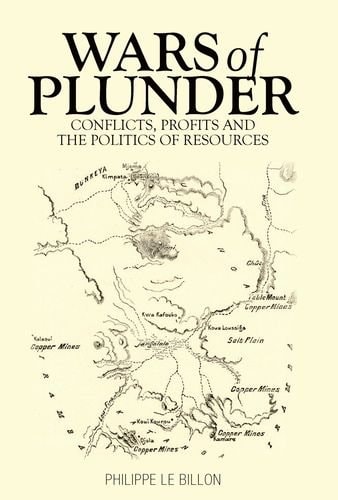
Wars of Plunder: Conflicts, Profits and the Politics of Resources
0
0
As an Amazon Associate and affiliate partner, Menrva Books earns from qualifying purchases. Learn more
Author Description
From Angola and Liberia to Iraq and the Congo, wars have taken place in resource rich countries full of poor people. In Wars of Plunder Philippe Le Billon explores how resources have shaped recent conflicts, and what the international community has tried to do about it. Focusing on key resources-oil, diamonds, and timber-he argues that resources and wars are linked in three main ways. First, resource revenues finance belligerents, a trend that has become all the more conspicuous since the withdrawal of Cold War foreign sponsorship in the late 1980s. Although the 'War on Terror' has redefined military assistance and the internationalisation of war, many belligerents continue to rely on and profit from 'conflict resources'. Second, resource exploitation generates conflict. As global demand for raw materials has sharply increased, competition over critical resources such as oil has resulted in a flurry of 'resource conflicts', from local community struggles against mining multinationals to regional and international tensions. Third, economic shocks and poor governance sharply increase the risk of war (the 'resource curse'). While today's resource boom is a major economic opportunity for resource rich but poor countries, reliance on resource exports often implies sharp economic downturns. Not all resources are the same, however, and effective responses are at hand. Sanctions, military interventions and wealth sharing have helped bring an end to conflicts, yet only deeper domestic and international reforms in resource governance can stop the plunder.
Menrva's Summary
THE THESIS
This book investigates the causal relationship between natural resource wealth and the prevalence of armed conflict in developing nations. Philippe Le Billon, a professor specializing in political geography and resource conflict, synthesizes extensive field research and economic data to argue that resources act as both a catalyst for violence and a primary source of financing for belligerents. He posits that the 'resource curse'—characterized by poor governance and economic volatility—creates structural vulnerabilities that exacerbate the risk of war in resource-rich regions.
THE SCOPE MAP
What You Will Find
- Analysis of the role of oil, diamonds, and timber in financing modern conflicts.
- Examination of the 'resource curse' and its impact on national economic stability.
- Case studies covering diverse regions including Angola, Liberia, Iraq, and the Congo.
- Evaluation of international policy responses such as sanctions, military intervention, and wealth-sharing agreements.
THE AUTHORITY PERSPECTIVE
Experts recognize this work as a foundational text that successfully synthesizes complex literature on resource-driven conflict without sacrificing analytical rigor. Scholars frequently highlight the author's extensive field research and his ability to provide a clear, structured framework for understanding the intersection of global economics and warfare.
Page Count:
363
Publication Date:
2013-11-01
Publisher:
Oxford University Press
ISBN-10:
0199327548
ISBN-13:
9780199327546
Economics
History
International relations
War
Community Tags
Similar Books