Development Financing and Economic Insecurity
0
0
As an Amazon Associate and affiliate partner, Menrva Books earns from qualifying purchases. Learn more
Author Description
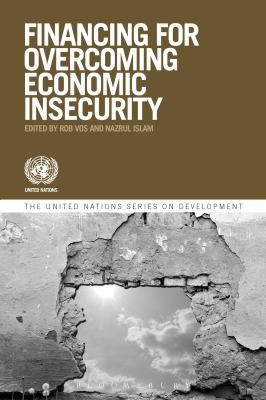
The world is witnessing the paradox of simultaneous increase in income and insecurity. According to available data, global average per capita income has increased in recent decades, while at the same time actual and perceived insecurity has also increased. This paradox is true for both developed and developing countries. However, the concrete form and causes of insecurity differs across these two groups of countries. To the extent that income levels in many developing countries are very low, economic insecurity in these countries takes a starker and chronic form. In Financing for Overcoming Economic Insecurity, leading experts examine the causes and consequences of rising economic insecurity and policy measures that can be adopted to overcome insecurity. The volume contains papers addressing issues of economic insecurity pertaining to both developed and developing countries and caused by both economic factors and natural hazards. It also discusses the issues at both macro and micro levels. The volume's focus on policy measures, such as redistribution and reinvestment of profit income in developed countries and imposition of capital control and promotion of micro insurance in developing countries, should be of much help to policymakers as well as researchers.--Bloomsbury Publishing.
Menrva's Summary
THE THESIS
The book investigates the paradoxical rise in both income and insecurity globally, despite economic growth. It examines the distinct forms and causes of economic insecurity in developed versus developing nations, noting its chronic nature in lower-income countries. The volume presents research by leading experts on the consequences of this insecurity and explores policy measures for overcoming it, addressing both macro and micro levels and considering factors beyond purely economic causes, such as natural hazards.
THE SCOPE MAP
- Analysis of the simultaneous increase in global income and perceived/actual insecurity.
- Distinction between the causes and manifestations of insecurity in developed and developing countries.
- Examination of chronic economic insecurity in low-income nations.
- Policy measures for developed countries, including redistribution and reinvestment of profit income.
- Policy measures for developing countries, such as capital controls and micro-insurance promotion.
- Discussion of economic insecurity stemming from both economic factors and natural hazards.
- Consideration of economic insecurity at both macro and micro levels.
THE AUTHORITY PERSPECTIVE
This volume brings together leading experts to examine the complex issue of rising economic insecurity in the face of global income growth. The collection addresses both developed and developing countries, exploring a range of causes from economic factors to natural hazards. Its focus on actionable policy measures, such as profit income redistribution and micro-insurance, positions it as a valuable resource for policymakers and researchers grappling with these challenges.
Page Count:
248
Publication Date:
2013-01-01
ISBN-10:
1849665346
ISBN-13:
9781849665346
Economics
Non-Fiction
Global Economy
Policy
Community Tags
Similar Books