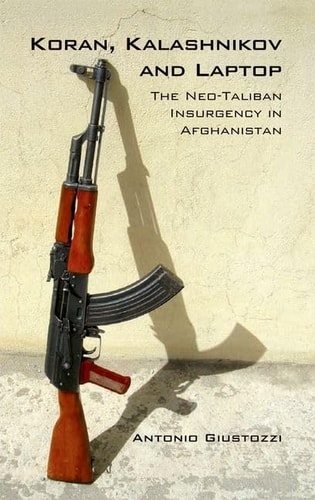
Koran, Kalashnikov and Laptop: The Neo-Taliban Insurgency in Afghanistan 2002-2007
0
0
As an Amazon Associate and affiliate partner, Menrva Books earns from qualifying purchases. Learn more
Author Description
Product DescriptionAnnouncements of an impending victory over the Taliban have been repeated ad nauseam since the Allied invasion of Afghanistan in 2002, particularly after the Presidential elections of 2004, which were said to have marked the "moral and psychological defeat of the Taliban". In moments oftriumphalism, some commentators claimed that "reconstruction and development" had won over the population, despite much criticism of the meagre distribution of aid, the lack of "nation-building" and corruption among Kabul's élite. In March 2006, both Afghan and American officials were stillclaiming, just before a series of particularly ferocious clashes, that "the Taliban are no longer able to fight large battles". Later that year, the mood in the mass media had turned to one of defeatism, even of impending catastrophe. In reality, as early as 2003-5 there was a growing body ofevidence that cast doubt on the official interpretation of the conflict. Rather than there having been a "2006 surprise", Giustozzi argues that the Neo-Taliban insurgency had put down strong roots in Afghanistan as early as 2003, a phenomenon he investigates in this timely and thought-provokingbook.
Menrva's Summary
THE THESIS
This book investigates the origins, organizational structure, and strategic evolution of the Neo-Taliban insurgency in Afghanistan between 2002 and 2007. Antonio Giustozzi, a recognized expert on Afghan security and political structures, challenges the prevailing official narratives that characterized the insurgency as a sudden resurgence. By analyzing the period following the Allied invasion, he argues that the movement established deep, resilient roots much earlier than Western officials acknowledged, effectively debunking the notion that the conflict was nearing a conclusion during the mid-2000s.
THE SCOPE MAP
What You Will Find
- A comprehensive analysis of Neo-Taliban recruitment, organizational hierarchy, and tactical shifts.
- An examination of the interplay between the drug trade, regional geopolitical influences, and the insurgency.
- A comparative study of the Afghan conflict against other global insurgent movements.
- A critical assessment of the counterinsurgency strategies employed by the Afghan government and international coalition forces.
THE AUTHORITY PERSPECTIVE
Experts and researchers frequently cite this work as a foundational text for understanding the early development of the Neo-Taliban. Readers often note the academic density of the prose and the extensive use of primary evidence to support the author's arguments.
Page Count:
176
Publication Date:
2007-01-01
Publisher:
Oxford University Press
ISBN-10:
0199326347
ISBN-13:
9780199326341
History
Politics
Military
Afghanistan
Central Asia
International relations
World politics
Asia
New Used & Rental Textbooks
Specific Topics
Terrorism
Community Tags
Similar Books