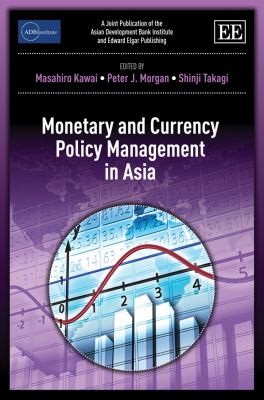
Monetary and Currency Policy Management in Asia
0
0
As an Amazon Associate and affiliate partner, Menrva Books earns from qualifying purchases. Learn more
Author Description
Asian economies strengthened their monetary and currency management after the Asian financial crisis of 1997/1998, and came through the global financial crisis of 20072009 relatively well. Nevertheless, the recent global crisis has presented new challenges.--Page 4 of cover.
Menrva's Summary
THE THESIS
The book investigates how Asian economies have managed their monetary and currency policies in the wake of major global financial crises. Masahiro Kawai, a distinguished fellow at the Asian Development Bank Institute, draws on the institute's research and expertise to analyze the strategies employed by Asian nations. The book examines the period following the 1997/1998 Asian financial crisis and the 2007-2009 global financial crisis, highlighting the relative resilience of these economies. It also addresses the new challenges that have emerged in the post-crisis landscape.
THE SCOPE MAP
- Analysis of monetary and currency management strategies in Asian economies.
- Focus on the period after the 1997/1998 Asian financial crisis.
- Examination of the impact and responses to the 2007-2009 global financial crisis.
- Discussion of new challenges faced by Asian economies in recent times.
- Insights from the Asian Development Bank Institute's research and publications.
- Contributions from leading economists and policy experts in the region.
THE AUTHORITY PERSPECTIVE
This publication, a joint effort by the Asian Development Bank Institute and Edward Elgar Publishing, offers a specialized analysis of monetary and currency policy management within Asian economies. The content focuses on the adaptive strategies employed by these nations in response to significant global financial disruptions, particularly the crises of 1997/1998 and 2007-2009. The book is likely to be of interest to economists, policymakers, and academics specializing in Asian economic development and international finance. Its perspective is grounded in the research and analysis conducted by the Asian Development Bank Institute.
Page Count:
302
Publication Date:
2012-01-01
ISBN-10:
0857933345
ISBN-13:
9780857933348
Non-Fiction
Economics
Finance
Community Tags
Similar Books