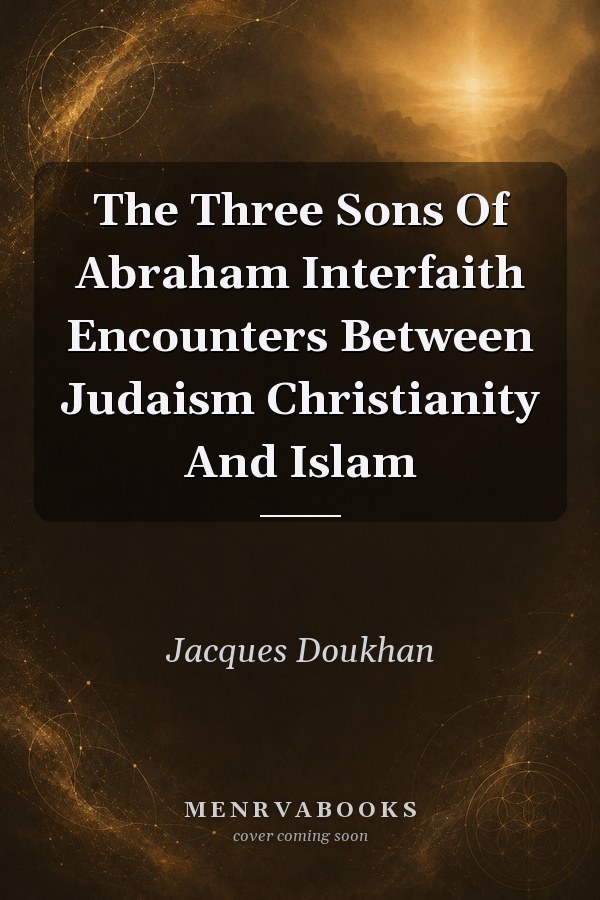
The Three Sons of Abraham: Interfaith Encounters Between Judaism, Christianity, and Islam
0
0
As an Amazon Associate and affiliate partner, Menrva Books earns from qualifying purchases. Learn more
Author Description
Jews, Christians and Muslims all trace their history and spiritual raison d'etre to their common tribal ancestor, Abraham. Their religious identities are interrelated and even dependent on each other. Jesus lived as a Jew and Christianity was born in the heart of Judaism. Early Christianity was inherently Jewish, referring to the same scriptures-the Tanach, later called the "Old Testament"-and holding to the same messianic promises. Mohammed, the prophet of Islam, knew both Christianity and Judaism. The Qur'an contains material indebted to the Old Testament and Jewish tradition, as well as stories and teachings from the New Testament; and Mohammed himself met Jews and Christians alike during his lifetime. Furthermore, the three religions share many fundamental ideas and beliefs. They testify to the same memory of Abraham; value the same divine law; urge the same ideal of righteousness; and proclaim the same hope of peace for the earth and salvation for humankind. Despite this shared heritage, the three Abrahamic faiths have sometimes been more closely identified not for what they offer to save the world but for what they bring to destabilise it. It is one of the depressing paradoxes of religion- supposedly a force for good-that it is all too frequently the occasion for conflict instead of peace, generosity and better treatment of one's neighbor. The contributors to this volume start from the premise that there is a price to be paid by the "sons of Abraham": whether Jews, Muslims or Christians. And that is the cost of learning how to be brothers through mutual and attentive engagement. Mature interfaith discussion offers respect for a shared heritage while also recognising points of distinctiveness. This book explores what articulating such regardful difference, as well as commonality, might mean for the future of faith relations. Including provocative reflections by Elie Wiesel, Irving Greenberg, Hans Kung and others, the book makes a vital contribution to dialogue
Menrva's Summary
THE THESIS
This volume investigates the complex and often fraught interfaith relationships between Judaism, Christianity, and Islam, focusing on their shared Abrahamic heritage and the challenges of mutual understanding. The book posits that despite their common ancestry and shared fundamental beliefs, these religions have frequently been sources of conflict rather than peace. It argues that the "sons of Abraham" must learn to be brothers through attentive engagement, exploring how to articulate regardful difference alongside commonality for the future of faith relations.
THE SCOPE MAP
- Exploration of the historical and spiritual lineage connecting Judaism, Christianity, and Islam through Abraham.
- Analysis of the interdependencies and shared scriptures/traditions among the three faiths.
- Discussion of fundamental shared ideas: divine law, righteousness, and hope for peace and salvation.
- Examination of the paradox of religion as a source of conflict despite its potential for good.
- Contributions from notable thinkers including Elie Wiesel, Irving Greenberg, and Hans Kung.
- Focus on the 'price to be paid' by adherents in learning brotherhood through mutual engagement.
- Consideration of how to express regardful difference and commonality in future faith relations.
THE AUTHORITY PERSPECTIVE
This collection of essays, featuring prominent thinkers, addresses the critical need for interfaith dialogue among the Abrahamic religions. It highlights both the deep historical and theological commonalities and the persistent conflicts that have characterized their relationships. The book aims to foster a more constructive future for these faiths by exploring the nuances of mutual engagement and the articulation of shared heritage alongside distinctiveness.
Page Count:
256
Publication Date:
2013-01-01
ISBN-10:
1780767439
ISBN-13:
9781780767437
Non-Fiction
Fiction
Religion
Christianity
Islam
Theology
Interfaith Dialogue
Judaism
Community Tags
Similar Books