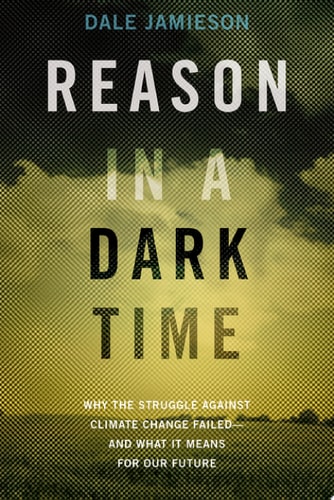
Reason in a Dark Time: Why the Struggle Against Climate Change Failed -- and What It Means for Our Future
0
0
As an Amazon Associate and affiliate partner, Menrva Books earns from qualifying purchases. Learn more
Author Description
From the 1992 Rio Earth Summit to the 2009 Copenhagen Climate Conference there was a concerted international effort to stop climate change. Yet greenhouse gas emissions increased, atmospheric concentrations grew, and global warming became an observable fact of life. In this book, philosopher Dale Jamieson explains what climate change is, why we have failed to stop it, and why it still matters what we do. Centered in philosophy, the volume also treats the scientific, historical, economic, and political dimensions of climate change. Our failure to prevent or even to respond significantly to climate change, Jamieson argues, reflects the impoverishment of our systems of practical reason, the paralysis of our politics, and the limits of our cognitive and affective capacities. The climate change that is underway is remaking the world in such a way that familiar comforts, places, and ways of life will disappear in years or decades rather than centuries. Climate change also threatens our sense of meaning, since it is difficult to believe that our individual actions matter. The challenges that climate change presents go beyond the resources of common sense morality -- it can be hard to view such everyday acts as driving and flying as presenting moral problems. Yet there is much that we can do to slow climate change, to adapt to it and restore a sense of agency while living meaningful lives in a changing world.
Menrva's Summary
THE THESIS
This book investigates why international efforts to mitigate climate change have failed and examines the philosophical, political, and cognitive barriers that prevent effective action. Dale Jamieson, a professor of environmental studies and philosophy, utilizes a multidisciplinary framework to analyze the intersection of human psychology, global economic systems, and political inertia. He argues that our current systems of practical reason are ill-equipped to handle the long-term, diffuse nature of climate change, necessitating a reevaluation of how we define individual and collective agency in a warming world.
THE SCOPE MAP
What You Will Find
- Historical analysis of international climate policy from the 1992 Rio Earth Summit to the 2009 Copenhagen Conference.
- Philosophical critique of common sense morality regarding individual contributions to greenhouse gas emissions.
- Examination of cognitive and affective limitations that hinder public engagement with climate risks.
- Proposed strategies for maintaining personal agency and meaningful action despite the systemic nature of the crisis.
THE AUTHORITY PERSPECTIVE
Experts and academics frequently cite this work as a foundational text for understanding the philosophical dimensions of the climate crisis. Readers often note the density of the prose, which balances rigorous ethical inquiry with accessible historical context regarding international environmental policy.
Page Count:
278
Publication Date:
2014-01-01
Publisher:
Oxford University Press
ISBN-10:
0199337683
ISBN-13:
9780199337682
Politics
Philosophy
Ethics
Sociology
Climate Change
Climatic changes
Nature
Public Policy
Community Tags
Similar Books