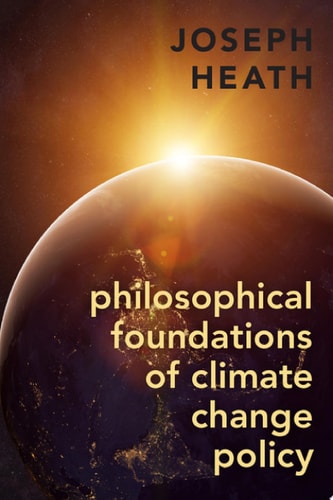
Philosophical Foundations of Climate Change Policy
Author Description
There is widespread agreement that something must be done to combat anthropogenic climate change. And yet what is the extent of our obligations? It would clearly be unjust for us to allow global warming to reach dangerous levels. But what is the nature of this injustice? Providing a plausible philosophical specification of the wrongness of our present inaction has proven surprisingly difficult. Much of this is due to the temporal structure of the problem, or the fact that there is such a significant delay between our actions and the effects that they produce. Many normative theories that sound plausible when applied to contemporaneous problems generate surprising or perverse results when applied to problems that extend over long periods of time, involving effects on individuals who have not yet been born. So while states have a range of sensible climate change policies at their disposal, the philosophical foundations of these policies remains indeterminate.By far the most influential philosophical position has been the variant of utilitarianism most popular among economists, which maintains that we have an obligation to maximize the well-being of all people, from now until the end of time. Climate change represents an obvious failure of maximization. Many environmental philosophers, however, find this argument unpersuasive, because it also implies that we have an obligation to maximize economic growth. Yet their attempts to provide alternative foundations for policy have proven unpersuasive. Joseph Heath presents an approach to thinking about climate change policy grounded in social contract theory, which focuses on the fairness of existing institutions, not the welfare of future generations, in order to generate a set of plausible policy prescriptions.
Menrva's Summary
THE THESIS
This book investigates the philosophical indeterminacy surrounding climate change policy by questioning the moral foundations of our current obligations to future generations. Joseph Heath, a philosopher specializing in social and political theory, critiques the prevailing utilitarian frameworks often employed by economists. He argues that these models frequently produce perverse results when applied to long-term temporal problems and proposes an alternative approach rooted in social contract theory to establish more robust policy prescriptions.
THE SCOPE MAP
What You Will Find
- A critique of utilitarianism as a primary framework for climate policy.
- An analysis of the temporal structure of climate change and its impact on normative theory.
- An application of social contract theory to institutional fairness.
- A shift in focus from future welfare maximization to the legitimacy of current institutional arrangements.
THE AUTHORITY PERSPECTIVE
Experts recognize this work as a significant contribution to the intersection of political philosophy and environmental policy. Readers frequently note the analytical rigor of the prose, which challenges standard economic assumptions regarding climate action.
Page Count:
352
Publication Date:
2021-01-01
Publisher:
Oxford University Press
ISBN-10:
0197568009
ISBN-13:
9780197568002
Philosophy
Politics
Public Policy
Ethics & Morality
Philosophy history
Climatic changes
Ethics
Climate Change
Community Tags
Similar Books