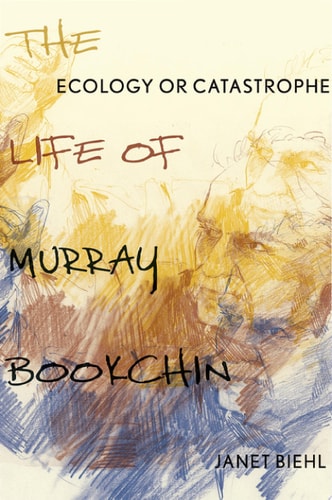
Ecology or Catastrophe: The Life of Murray Bookchin
0
0
As an Amazon Associate and affiliate partner, Menrva Books earns from qualifying purchases. Learn more
Author Description
Murray Bookchin Was Not Only One Of The Most Significant And Influential Environmental Philosophers Of The Twentieth Century--he Was Also One Of The Most Prescient. From Industrial Agriculture To Nuclear Radiation, Bookchin Has Been At The Forefront Of Every Major Ecological Issue Since The Very Beginning, Often Proposing A Solution Before Most People Even Recognized There Was A Problem. Ecology Or Catastrophe: The Life Of Murray Bookchin Is The First Biography Of This Groundbreaking Environmental And Political Thinker. Author Janet Biehl Worked As His Collaborator And Copyeditor For 19 Years, Editing His Every Word. Thanks To Her Extensive Personal History With Bookchin As Well As Her Access To His Papers And Archival Research, Ecology Or Catastrophe Offers Unique Insight Into His Personal And Professional Life. Founder Of The Social Ecology Movement, Bookchin First Started Raising Environmental Issues In 1952. He Foresaw Global Warming In The 1960s And Even Then Argued That We Should Look Into Renewable Energy Sources As An Alternative To Fossil Fuels. Wary Of Pesticides And Other Chemicals Used In Industrial Agriculture, He Was Also An Early Advocate Of Small-scale Organic Farming, Which Has Developed Into The Present Locavore Movement And The Revival Of Organic Markets. Even Occupy Can Trace The Origins Of Its Leaderless Structure And General Assemblies To The Nonhierarchical Organizational Form Bookchin Developed As A Libertarian Socialist. Bookchin Believed That Social And Ecological Issues Were Deeply Intertwined. Convinced That Capitalism Pushes Businesses To Maximize Profits And Ignore Humanist Concerns, He Argued That Eco-crises Could Be Resolved By A New Social Arrangement. His Solution Was Communalism, A New Form Of Libertarian Socialism That He Developed. An Optimist And Utopian, Bookchin Believed In The Potentiality For Human Beings To Use Reason To Solve All Social And Ecological Problems.
Menrva's Summary
THE THESIS
This biography investigates the intellectual evolution and political legacy of Murray Bookchin, a pivotal figure in twentieth-century environmental philosophy. Author Janet Biehl, who served as Bookchin's long-term collaborator and editor, utilizes extensive archival research and personal correspondence to document his development of social ecology. The text argues that Bookchin's early identification of ecological crises was inextricably linked to his critique of capitalist structures and his advocacy for communalism as a necessary social reorganization.
THE SCOPE MAP
What You Will Find
- A comprehensive chronological account of Bookchin's life from his early activism in 1952 to his later theoretical contributions.
- An analysis of the origins of the social ecology movement and its influence on modern political movements like Occupy.
- Primary source documentation derived from Bookchin's personal papers and the author's nineteen-year professional relationship with the subject.
- A detailed exploration of Bookchin's early warnings regarding global warming, industrial agriculture, and the necessity of renewable energy.
THE AUTHORITY PERSPECTIVE
Scholars and environmental historians recognize this work as the definitive biographical account of Bookchin's life and thought. Readers frequently note the depth of the author's access to primary materials, which provides a nuanced understanding of the intersection between Bookchin's personal history and his radical political philosophy.
Page Count:
312
Publication Date:
2015-01-01
Publisher:
Oxford University Press
ISBN-10:
0199342490
ISBN-13:
9780199342495
Biography
Philosophy
History
Social Ecology
Community Tags
Other Editions(2)
Similar Books




Reader Comments
Share Your Thoughts
No comments yet. Be the first to share your thoughts!