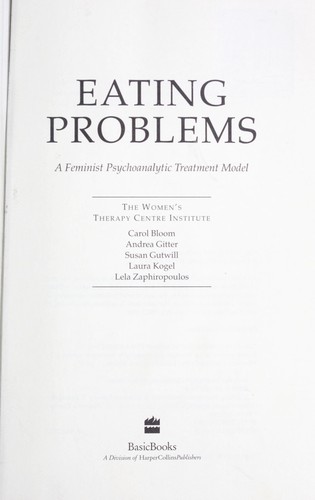
Eating Problems
0
0
As an Amazon Associate and affiliate partner, Menrva Books earns from qualifying purchases. Learn more
Author Description
Nobody ever really eats alone. We must all negotiate the voice of our culture and its contradictory messages about food and the body. These cultural imperatives especially confuse and burden women as they struggle with the insidious power of the diet culture and current demands about body size and shape. In this insightful analysis of an treatment guide for eating problems, the authors develop a clinically useful theory of how society’s injunctions about the “right” body and the “right” diet become inscribed in patients and join with their intrapsychic emotional life. By merging their theory of the internalization of culture (and feminist critique of that culture) with an object relations and interpersonal psychoanalytic theory, the authors deliver for all therapists a powerful therapeutic model, one honed by twenty years of practice at the Women’s Therapy Centre Institute.Many treatments for eating problems make controlling the symptom their goal; this book demonstrates that this approach merely reproduces in the patient the loss of agency created by internalized messages from a fat-phobic society. Only by understanding the symptom as an expression of the confluence of intrapsychic, interpersonal, and cultural experience can the therapist help the patient learn to live in peace in her body. The authors present a psychodynamic understanding of hunger, satiation, food, and body image, and show how everyday body/self and eating experiences contain and reveal the essential dynamics of the person. They also describe how these dynamics, as well as the influences of consumer culture, affect transference and countertransference in treatment.A thoughtful discussion of the convergence of eating problems and sexual abuse extends the existing theory about how consumer culture injures women and aggravates the wounds of abuse. It also details the tremendous value of this feminist psychoanalytic treatment model for helping people with dissociative problems, including multiple per
Menrva's Summary
THE THESIS
This book investigates how societal pressures and internalized cultural messages contribute to eating problems, particularly in women. The authors, drawing on twenty years of practice at the Women's Therapy Centre Institute, present a clinically useful theory that merges feminist critique with object relations and interpersonal psychoanalytic theory. They argue that controlling symptoms is less effective than understanding them as expressions of intrapsychic, interpersonal, and cultural experiences, offering a psychodynamic understanding of hunger, satiation, food, and body image.
THE SCOPE MAP
- Analysis of the internalization of cultural injunctions about body size and diet.
- Development of a therapeutic model for therapists treating eating problems.
- Critique of diet culture and its impact on women's relationship with their bodies.
- Exploration of the confluence of eating problems and sexual abuse.
- Psychodynamic understanding of hunger, satiation, food, and body image.
- Discussion of how consumer culture influences transference and countertransference in therapy.
- Examination of the feminist psychoanalytic treatment model's value for dissociative problems.
THE AUTHORITY PERSPECTIVE
This work is recognized for its insightful analysis and clinically useful theory on eating problems, particularly for its feminist psychoanalytic approach. It offers therapists a powerful model honed by extensive practice, moving beyond symptom control to address the deeper cultural and intrapsychic roots of these issues. The book is noted for its detailed exploration of how societal messages about bodies and food become internalized, impacting patients and influencing therapeutic dynamics.
Page Count:
352
Publication Date:
1994-01-01
ISBN-10:
0465088767
Health
Non-Fiction
Self-help
Psychology
Feminist Theory
Community Tags
Similar Books