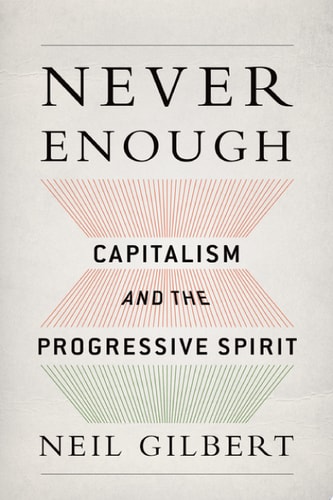
Never Enough
0
0
As an Amazon Associate and affiliate partner, Menrva Books earns from qualifying purchases. Learn more
Author Description
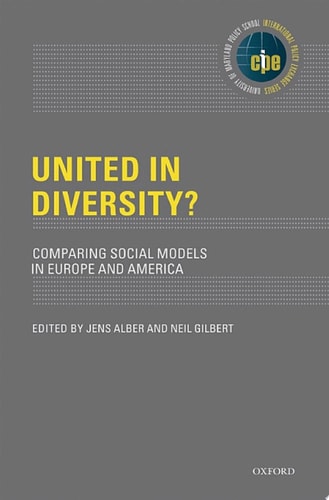
It Is Said That Greed Fuels Capitalism And Socialism Feeds On Envy. But What Happens In A Stable Society When A Successful Economy Generates Material Progress For One Population Sector, While Simultaneously Creating Income Inequality And Poverty For Another Sector? While This Has Long Been A Classic Debate For Economists, Neil Gilbert, A Social Welfare Theorist, Offers A New Take. In This Landmark Work, Gilbert Addresses The Long-standing Tensions Between Capitalism And The Progressive Spirit And Challenges The Contemporary Progressive Outlook On The Failures Of Capitalism. In Doing This, Never Enough Analyzes The Empirical Evidence For Conventional Claims About The Real Level Of Poverty, The Presumed Causes And Consequences Of Inequality, The Meaning And Underlying Dynamics Of Social Mobility, And The Necessity For More Social Welfare Spending And Universal Benefits. The Book's Careful Analysis Suggests That It Is Time To Resist The Material Definition Of Progress That Stands So High On The Current Agenda And Envision Alternative Ways For Our Government To Advance The Good Society. Insatiable Consumption And The Commodification Of Everyday Life Has Dominated The Last Half-century, And Is Encouraged By Modern Capitalism Because It Feeds The Economy And Is Also Used As A Measure Of Individual Success. But Gilbert Argues That It Is Perhaps No Longer The Best Way To Stimulate The Economy. Never Enough Also Challenges The Prevailing Assumptions About The Decline Of Middle-class Prosperity, Opportunity And Material Well-being In The United States And In Other Post-industrial Nations. In A Careful Reading Of The Evidence And A Critical Analysis Of Its Implications, Gilbert Demonstrates The Extent To Which The Customary Progressive Claims About The Severity Of Poverty, Inequality, Social Mobility And The Benefits Of Universalism Not Only Distort The Empirical Reality Of Modern Life In An Era Of Abundance, But Confounds Efforts To Help Those Most In Need.
Menrva's Summary
THE THESIS
This book investigates whether the contemporary progressive critique of capitalism—specifically regarding poverty, inequality, and social mobility—accurately reflects empirical reality in modern post-industrial societies. Neil Gilbert, a professor of social welfare, utilizes economic data and sociological analysis to challenge the prevailing narrative that material progress has failed the middle class. He argues that current definitions of success, rooted in insatiable consumption, are no longer the most effective metrics for societal well-being or economic stability.
THE SCOPE MAP
What You Will Find
- Analysis of empirical data regarding poverty levels and income inequality in the United States and other post-industrial nations.
- A critical examination of the dynamics of social mobility and the effectiveness of universal social welfare benefits.
- Evaluation of the impact of commodification and consumption-based metrics on individual and societal progress.
- A proposed framework for redefining the 'good society' beyond the current focus on material accumulation.
THE AUTHORITY PERSPECTIVE
Experts and reviewers note that the text provides a rigorous, data-driven counter-argument to standard progressive economic critiques. Readers frequently highlight the book's dense analytical approach, which serves as a foundational text for those seeking to understand the complexities of modern social welfare policy.
Page Count:
224
Publication Date:
2016-01-01
Publisher:
Oxford University Press
ISBN-10:
0199361347
ISBN-13:
9780199361342
Economics
Social Science
Sociology
Public Policy
Community Tags
Similar Books