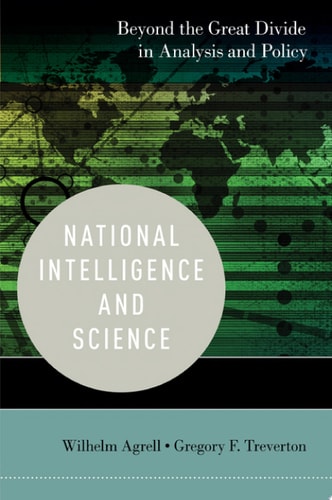
National Intelligence and Science: Beyond the Great Divide in Analysis and Policy
0
0
As an Amazon Associate and affiliate partner, Menrva Books earns from qualifying purchases. Learn more
Author Description
Intelligence Is Currently Facing Increasingly Challenging Cross-pressures From Both A Need For Accurate And Timely Assessments Of Potential Or Imminent Security Threats And The Unpredictability Of Many Of These Emerging Threats. We Are Living In A Social Environment Of Growing Security And Intelligence Challenges, Yet The Traditional, Narrow Intelligence Process Is Becoming Increasingly Insufficient For Coping With Diffuse, Complex, And Rapidly-transforming Threats. The Essence Of Intelligence Is No Longer The Collection, Analysis, And Dissemination Of Secret Information, But Has Become Instead The Management Of Uncertainty In Areas Critical For Overriding Security Goals--not Only For Nations, But Also For The International Community As A Whole. For Its Part, Scientific Research On Major Societal Risks Like Climate Change Is Facing A Similar Cross-pressure From Demand On The One Hand And Incomplete Data And Developing Theoretical Concepts On The Other. For Both Of These Knowledge-producing Domains, The Common Denominator Is The Paramount Challenges Of Framing And Communicating Uncertainty And Of Managing The Pitfalls Of Politicization. National Intelligence And Science Is One Of The First Attempts To Analyze These Converging Domains And The Implications Of Their Convergence, In Terms Of Both More Scientific Approaches To Intelligence Problems And Intelligence Approaches To Scientific Problems. Science And Intelligence Constitute, As The Book Spells Out, Two Remarkably Similar And Interlinked Domains Of Knowledge Production, Yet Ones That Remain Traditionally Separated By A Deep Political, Cultural, And Epistemological Divide. Looking Ahead, The Two Twentieth-century Monoliths--the Scientific And The Intelligence Estates--are Becoming Simply Outdated In Their Traditional Form. The Risk Society Is Closing The Divide, Though In A Direction Not Foreseen By The Proponents Of Turning Intelligence Analysis Into A Science, Or The New Production Of Scientific Knowledge.
Menrva's Summary
THE THESIS
This book investigates the structural and epistemological convergence between the intelligence community and the scientific research establishment in the face of modern, complex global risks. The authors, Gregory F. Treverton and Wilhelm Agrell, leverage their extensive expertise in national security and intelligence analysis to argue that both domains are currently failing to manage uncertainty effectively. By examining the shared challenges of politicization, data gaps, and the need for rapid assessment, the text proposes that the traditional separation between these two knowledge-producing monoliths is no longer sustainable in a rapidly transforming security environment.
THE SCOPE MAP
What You Will Find
- Comparative analysis of intelligence tradecraft and scientific research methodologies.
- Examination of the 'Risk Society' framework as a driver for institutional change.
- Case studies on the communication of uncertainty in high-stakes policy environments.
- Strategies for bridging the cultural and political divide between intelligence and scientific communities.
THE AUTHORITY PERSPECTIVE
Experts in the field of intelligence studies identify this work as a critical examination of the limitations inherent in traditional analytical processes. Readers frequently note the academic density of the prose, which serves as a foundational text for those analyzing the intersection of policy, science, and national security.
Page Count:
240
Publication Date:
2014-01-01
Publisher:
Oxford University Press
ISBN-10:
019936088X
ISBN-13:
9780199360888
True Crime
Politics
National security
Sociology
Kindle Store
Espionage
Philosophy history
Engineering
Kindle eBooks
Science
Security Studies
Public Policy
Information Theory
Categories
Science Policy
Community Tags
Other Editions(2)

Similar Books











Reader Comments
Share Your Thoughts
No comments yet. Be the first to share your thoughts!