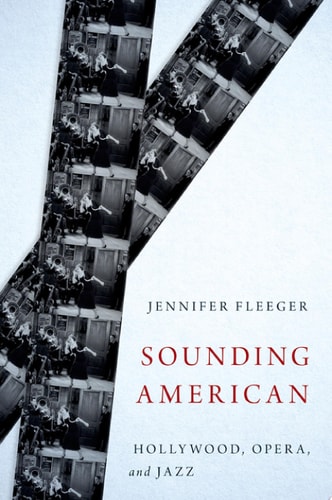
Sounding American: Hollywood, Opera, and Jazz
0
0
As an Amazon Associate and affiliate partner, Menrva Books earns from qualifying purchases. Learn more
Author Description
Sounding American: Hollywood, Opera, and Jazz tells the story of the interaction between musical form, film technology, and ideas about race, ethnicity, and the nation during the American cinema's conversion to sound. Contrary to most accepted narratives about the conversion, which tend to explain the competition between the Hollywood studios' film sound technologies in qualitative and economic terms, this book argues that the battle between disc and film sound was waged primarily in an aesthetic realm. Opera and jazz in particular, though long neglected in studies of the film score, were extremely important in defining the scope of the American soundtrack, not only during the conversion, but also once sound had been standardized. Examining studio advertisements, screenplays, scores, and the films themselves, author Jennifer Fleeger concentrates on the interactions between musical form and film technology, arguing that each of the major studios appropriated opera and jazz in a unique way in order to construct its own version of an ideal American voice. Traditional histories of Hollywood film music have tended to concentrate on the unity of the score, a model that assumes a passive spectator. Sounding American claims that the classical Hollywood film is essentially an illustrated jazz-opera with a musical structure that encourages an active form of listening and viewing in order to make sense of what is ultimately a fragmentary text.
Menrva's Summary
THE THESIS
This book investigates how the integration of opera and jazz into early American sound cinema functioned as a primary aesthetic battleground for defining national identity and cultural voice. Jennifer Fleeger, a scholar of film and media, utilizes a diverse array of primary sources—including studio advertisements, screenplays, and musical scores—to challenge traditional economic narratives regarding the transition to sound. She argues that Hollywood studios utilized these specific musical forms to construct distinct versions of an 'American' identity, moving away from the assumption that early film scores were merely passive background elements.
THE SCOPE MAP
What You Will Find
- Analysis of the technological transition from silent film to synchronized sound in Hollywood.
- Examination of the aesthetic competition between disc-based and film-based sound systems.
- Case studies of how major studios appropriated opera and jazz to define their corporate and national brand.
- A theoretical framework proposing that classical Hollywood cinema functions as a fragmentary 'jazz-opera' requiring active audience engagement.
THE AUTHORITY PERSPECTIVE
Scholars in film and musicology recognize this work for its specific focus on the neglected roles of opera and jazz in the formation of the American soundtrack. Readers frequently note the academic density of the prose and the author's meticulous use of archival materials to support her arguments.
Page Count:
234
Publication Date:
2014-01-01
Publisher:
Oxford University Press
ISBN-10:
0199366500
ISBN-13:
9780199366507
Jazz
American History
Film Studies
Communication
Music History
Humanities
Media Studies
Community Tags
Similar Books