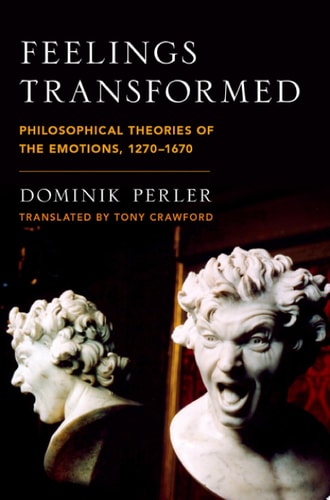
Feelings Transformed
0
0
As an Amazon Associate and affiliate partner, Menrva Books earns from qualifying purchases. Learn more
Author Description
What Are Emotions? How Do They Arise? How Do They Relate To Other Mental And Bodily States? And What Is Their Specific Structure? The Book Discusses These Questions, Focusing On Medieval And Early Modern Theories. It Looks At A Great Number Of Authors, Ranging From Aquinas To Spinoza, And Shows That They Gave Sophisticated Accounts Of Human Emotions. They Were Particularly Interested In The Way We Cope With Our Emotions: How We Can Change Or Perhaps Even Overcome Them? To Answer This Question, Medieval And Early Modern Philosophers Looked At The Cognitive Content Of Emotions, For They Were All Convinced That We Need To Work On That Content If We Want To Change Them. The Book Therefore Pays Particular Attention To The Intimate Relationship Between Theories Of Emotions And Theories Of Cognition. Moreover, The Book Emphasizes The Importance Of The Metaphysical Framework For Medieval And Early Modern Theories Of Emotions. It Was A Transformation Of This Framework That Made New Theories Possible. Starting With An Analysis Of The Aristotelian Framework, The Book Then Looks At Skeptical, Dualist And Monist Frameworks, And It Examines How The Nature Of Emotions Was Explained In Each Of Them. The Discussion Also Takes The Theological And Scientific Context Into Account, For Changes In This Context Quite Often Gave Rise To New Problems - Problems That Concerned The Love Of God, The Joy Of Resurrected Souls, Or The Fear Arising In A Soul That Is Present In A Body. All Of These Problems Are Examined On The Basis Of Close Textual Analysis.
Menrva's Summary
THE THESIS
This book investigates how medieval and early modern philosophers conceptualized the structure, origin, and regulation of human emotions. Dominik Perler, a scholar of historical philosophy, utilizes a rigorous textual analysis of major thinkers from Aquinas to Spinoza to demonstrate how these historical figures integrated cognitive and metaphysical frameworks to explain emotional states. The work argues that these philosophers viewed emotions not as isolated phenomena, but as states deeply rooted in cognitive content that could be modified through intellectual engagement.
THE SCOPE MAP
What You Will Find
- A comparative analysis of Aristotelian, skeptical, dualist, and monist metaphysical frameworks.
- An examination of the relationship between theories of cognition and theories of emotion.
- Historical case studies ranging from the theological implications of the love of God to the physiological fear experienced by the soul in the body.
- A detailed survey of philosophical evolution from the medieval period through the early modern era.
THE AUTHORITY PERSPECTIVE
Scholars in the field of intellectual history recognize this work as a comprehensive resource for understanding the development of emotion theory. Readers frequently note the academic density of the prose and the author's meticulous attention to primary source material.
Page Count:
496
Publication Date:
2018-01-01
Publisher:
Oxford University Press
ISBN-10:
0199383499
ISBN-13:
9780199383498
Philosophy
Medieval Philosophy
Metaphysics
Community Tags
Similar Books