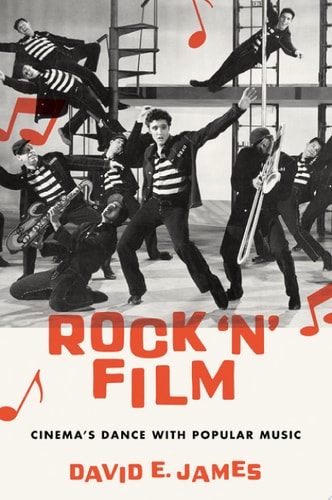
Rock 'N' Film: Cinema's Dance With Popular Music
0
0
As an Amazon Associate and affiliate partner, Menrva Books earns from qualifying purchases. Learn more
Author Description
For two decades after the mid-1950s, biracial popular music played a fundamental role in progressive social movements on both sides of the Atlantic. Balancing rock's capacity for utopian popular cultural empowerment with its usefulness for the capitalist media industries, Rock 'N' Film explores how the music's contradictory potentials were reproduced in various kinds of cinema, including major studio productions, minor studios' exploitation projects, independent documentaries, and the avant-garde.These include Rock Around the Clock and other 1950s jukebox musicals; the films Elvis made before being drafted, especially King Creole, as well as the formulaic comedies in which Hollywood abused his genius in the 1960s; early documentaries such as The T.A.M.I. Show that presented James Brown and the Rolling Stones as the core of a black-white, US-UK cultural commonality; A Hard Day's Night that marked the British Invasion; Dont Look Back, Monterey Pop, Woodstock, and other Direct Cinema documentaries about the music of the counterculture; and avant-garde films about the Rolling Stones by Jean-Luc Godard, Kenneth Anger, and Robert Frank. After the turn of the decade, notably Gimme Shelter, in which the Stones appeared to be complicit in the Hells Angels' murder of a young black man, 1960s' music-and films about it-reverted to separate black and white traditions based respectively on soul and country. These produced blaxploitation and Lady Sings the Blues on the one hand, and bigoted representations of Southern culture in Nashville on the other. Ending with the deaths of their stars, both films implied that rock 'n' roll had died or even, as David Bowie proclaimed, that it had committed suicide. But in his documentary about Bowie, Ziggy Stardust and the Spiders from Mars, D.A. Pennebaker triumphantly re-affirmed the community of musicians and fans in glam rock.In analyzing this history, David E. James adapts the methodology of histories of the classic film musical to show h
Menrva's Summary
THE THESIS
How did the intersection of popular music and cinema shape the social and political landscape of the mid-twentieth century? David E. James, a scholar of film and cultural history, examines the complex relationship between rock music and various cinematic forms from the 1950s through the 1970s. He argues that rock music functioned simultaneously as a tool for progressive social empowerment and a commodity for capitalist media industries, with cinema serving as the primary site where these contradictory forces were negotiated and reproduced.
THE SCOPE MAP
What You Will Find
- Analysis of diverse cinematic formats including studio musicals, exploitation films, independent documentaries, and avant-garde works.
- Historical examination of the British Invasion, the counterculture movement, and the subsequent divergence of soul and country music traditions.
- Case studies of iconic films such as A Hard Day's Night, Monterey Pop, Gimme Shelter, and Ziggy Stardust and the Spiders from Mars.
- Methodological application of classic film musical history to the study of rock-oriented cinema.
THE AUTHORITY PERSPECTIVE
Experts recognize this work as a rigorous exploration of the intersection between media studies and musicology. Readers frequently note the academic density of the prose, which provides a comprehensive framework for understanding the cultural evolution of rock and roll on screen.
Page Count:
482
Publication Date:
2015-01-01
Publisher:
Oxford University Press
ISBN-10:
0199387621
ISBN-13:
9780199387625
Non-Fiction
Sociology
Graphic ArtsCommunicationsDesign
Film Criticism
Professional Career & Trade
Criticism history
Music History
Humanities
Film History
Community Tags
Similar Books