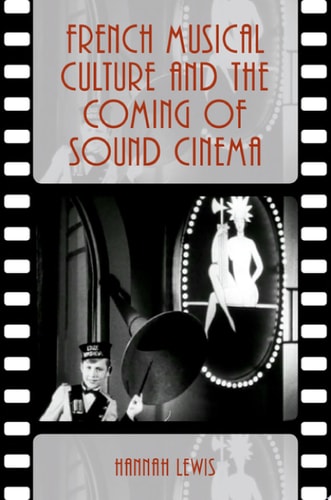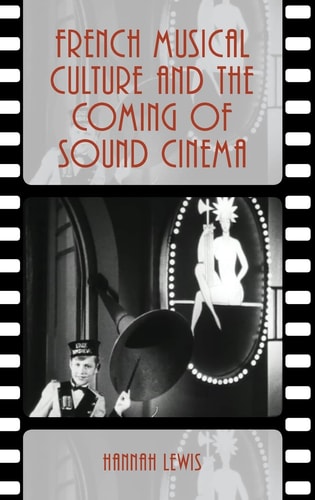
French Musical Culture and the Coming of Sound Cinema
0
0
As an Amazon Associate and affiliate partner, Menrva Books earns from qualifying purchases. Learn more
Author Description
The transition from silent to synchronized sound film was one of the most dramatic transformations in cinema's history, as it radically changed the technology, practices, and aesthetics of filmmaking within a few short years. In France, debates about sound cinema were fierce and widespread. In French Musical Culture and the Coming of Sound Cinema, author Hannah Lewis argues that the debates about sound film resonated deeply within French musical culture of the early 1930s, and conversely, that discourses surrounding a range of French musical styles and genres shaped audiovisual cinematic experiments during the transition to sound.Lewis' book focuses on many of the most prominent directors and screenwriters of the period, from Luis Buñuel to Jean Vigo, as well as experiments found in lesser-known films. Additionally, Lewis examines how early sound film portrayed the diverse soundscape of early 1930s France, as filmmakers drew from the music hall, popular chanson, modernist composition, opera and operetta, and explored the importance of musical machines to depict and to shape French audiovisual culture. In this light, the author discusses the contributions of well-known composers for film alongside more popular music hall styles, all of which had a voice within the heterogeneous soundtrack of French sound cinema. By delving into this fascinating developmental period of French cinematic history, Lewis encourages readers to challenge commonly-held assumptions about how genres, media, and artistic forms relate to one another, and how these relationships are renegotiated during moments of technological change.
Menrva's Summary
THE THESIS
How did the introduction of synchronized sound technology influence and reflect the broader landscape of French musical culture during the early 1930s? Hannah Lewis, a scholar of music and media, utilizes archival research and film analysis to argue that the transition to sound cinema was not merely a technological shift but a cultural negotiation. She posits that existing French musical traditions—ranging from opera to popular chanson—actively shaped early sound film aesthetics, while simultaneously, the new medium of cinema altered the perception and production of these musical forms.
THE SCOPE MAP
What You Will Find
- Analysis of the transition from silent to synchronized sound film in France during the early 1930s.
- Examination of diverse musical influences including music hall, popular chanson, modernist composition, and operetta.
- Case studies of prominent directors such as Luis Buñuel and Jean Vigo alongside lesser-known cinematic experiments.
- Exploration of the role of musical machines in shaping audiovisual culture.
Scope Limits
- The study focuses specifically on the French context and does not provide a comprehensive global history of sound cinema.
- The analysis is centered on the early 1930s transition period rather than the later evolution of French sound film.
THE AUTHORITY PERSPECTIVE
Scholars and film historians recognize this work as a significant contribution to the study of early sound cinema and its intersection with national musical identity. Readers frequently note the academic density of the prose, which provides a rigorous framework for understanding the complex relationship between technological change and artistic expression.
Page Count:
264
Publication Date:
2018-10-03
Publisher:
Oxford University Press
ISBN-10:
0190635975
ISBN-13:
9780190635978
Criticism history
Film History
French Cinema
Music History
Media Studies
Musicology
Musical Films