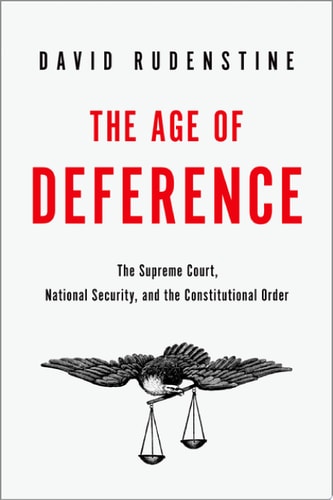
The Age of Deference
0
0
As an Amazon Associate and affiliate partner, Menrva Books earns from qualifying purchases. Learn more
Author Description
In October 1948-one Year After The Creation Of The U.s. Air Force As A Separate Military Branch-a B-29 Superfortress Crashed On A Test Run, Killing The Plane's Crew. The Plane Was Constructed With Poor Materials, And The Families Of The Dead Sued The U.s. Government For Damages. In The Case, The Government Claimed That Releasing Information Relating To The Crash Would Reveal Important State Secrets, And Refused To Hand Over The Requested Documents. Judges At Both The U.s. District Court Level And Circuit Level Rejected The Government's Argument And Ruled In Favor Of The Families. However, In 1953, The Supreme Court Reversed The Lower Courts' Decisions And Ruled That In The Realm Of National Security, The Executive Branch Had A Right To Withhold Information From The Public. Judicial Deference To The Executive On National Security Matters Has Increased Ever Since The Issuance Of That Landmark Decision. Today, The Government's Ability To Invoke State Secrets Privileges Goes Unquestioned By A Largely Supine Judicial Branch. David Rudenstine's The Age Of Deference Traces The Court's Role In The Rise Of Judicial Deference To Executive Power Since The End Of World War Ii. He Shows How In Case After Case, Going Back To The Truman And Eisenhower Presidencies, The Court Has Ceded Authority In National Security Matters To The Executive Branch. Since 9/11, The Executive Faces Even Less Oversight. According To Rudenstine, This Has Had A Negative Impact Both On Individual Rights And On Our Ability To Check Executive Authority When Necessary. Judges Are Mindful Of The Limits Of Their Competence In National Security Matters; This, Combined With Their Insulation From Political Accountability, Has Caused Them In Matters As Important As The Nation's Security To Defer To The Executive. Judges Are Also Afraid Of Being Responsible For A Decision That Puts The Nation At Risk And The Consequences For The Judiciary In The Wake Of Such A Decision. Nonetheless, The Age Of Deference Argues Tha
Menrva's Summary
THE THESIS
How has the United States judiciary evolved to consistently defer to executive authority in matters of national security since the mid-twentieth century? David Rudenstine, a legal scholar, examines the historical trajectory of judicial restraint, focusing on the shift in power dynamics between the courts and the executive branch. By analyzing pivotal legal cases from the Truman and Eisenhower administrations to the post-9/11 era, the author argues that the judiciary has increasingly abdicated its oversight role, prioritizing executive claims of state secrecy over individual rights and institutional checks and balances.
THE SCOPE MAP
What You Will Find
- Analysis of the 1953 Supreme Court decision regarding the B-29 Superfortress crash and the state secrets privilege.
- Examination of judicial decision-making processes in the context of national security and political accountability.
- Review of legal precedents from the post-World War II era through the modern era of the war on terror.
- Discussion of the institutional limitations and psychological pressures that influence judges when evaluating executive claims.
THE AUTHORITY PERSPECTIVE
Legal scholars and historians frequently cite this work as a critical examination of the erosion of judicial oversight in the American constitutional system. Readers often note the academic rigor of the text, which provides a detailed, case-based analysis of how the judiciary has systematically ceded its authority to the executive branch over several decades.
Page Count:
240
Publication Date:
2016-01-01
Publisher:
Oxford University Press
ISBN-10:
0199381496
ISBN-13:
9780199381494
History
Government
Law
National security
Community Tags
Similar Books