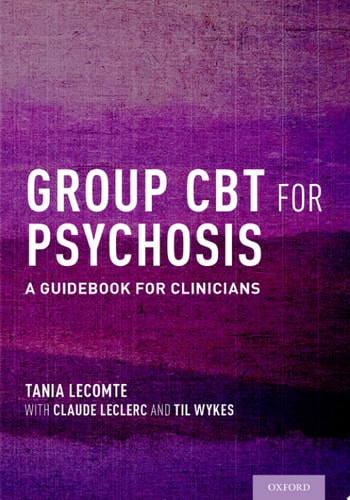
Group CBT for Psychosis: A Guidebook for Clinicians
0
0
As an Amazon Associate and affiliate partner, Menrva Books earns from qualifying purchases. Learn more
Author Description
Psychosis implies an alteration of one's reality, with specific beliefs and sensory experiences that affect one's judgment and capacity to function socially. Previously, medication alone was believed to attenuate or eliminate psychotic symptoms; however, more than two decades of empirical evidence now support the use of cognitive behavior therapy (CBT) for psychosis, including group CBT for psychosis.Group CBT for Psychosis offers the first published group therapy module of its kind and is suitable for a broad range of mental health professionals. Group therapy for people with psychosis is often recommended given its cost-efficiency and indirect benefits such as improved social skills and social support, yet delivery of this group intervention necessitates specialized skills and knowledge not typically included as part of most clinical training programs. This book offers thorough descriptions of relevant techniques, clinical vignettes, and worksheets for use in group sessions. Individual chapters focus on the basics of CBT for psychosis, essential elements of group therapy, explaining the CBT model in a group context, techniques for various symptoms, measuring change, common obstacles to group CBT for psychosis, and much more. Group CBT for Psychosis will be a valuable resource for psychiatrists, psychologists, psychiatric nurses, occupational therapists, social workers, and graduate students in these fields. Professors and supervisors teaching clinical skills, such as how to run groups or how to conduct CBT in groups with people with psychotic disorders, will also find this book very useful.
Menrva's Summary
THE THESIS
This guidebook investigates the clinical efficacy and practical application of group-based cognitive behavioral therapy (CBT) as a primary intervention for individuals experiencing psychosis. Authors Claude Leclerc, Tania Lecomte, and Til Wykes draw upon over two decades of empirical research to bridge the gap between theoretical understanding and clinical implementation. The text provides a structured framework designed to equip mental health professionals with the specialized skills necessary to facilitate group sessions effectively, moving beyond traditional medication-only approaches.
THE SCOPE MAP
What You Will Find
- A comprehensive, modular curriculum for conducting group CBT sessions specifically tailored for psychotic disorders.
- Practical clinical vignettes and reproducible worksheets for direct use in therapeutic settings.
- Evidence-based strategies for addressing specific psychotic symptoms and managing common group dynamics.
- Methodologies for measuring patient progress and overcoming obstacles inherent in group-based interventions.
THE AUTHORITY PERSPECTIVE
Clinicians and educators identify this work as a foundational resource for filling a significant gap in standard psychiatric training programs. Professionals frequently note the clarity of the instructional design and the utility of the provided clinical tools for both novice and experienced practitioners.
Page Count:
312
Publication Date:
2016-07-14
Publisher:
Oxford University Press
ISBN-10:
0199391521
ISBN-13:
9780199391523
Psychology
Psychiatry
Mental Health
Mental Illness
Community Tags
Similar Books