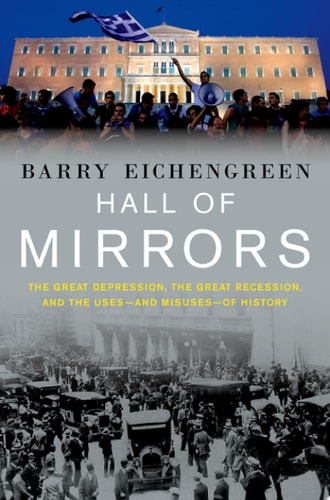
Hall of Mirrors
0
0
As an Amazon Associate and affiliate partner, Menrva Books earns from qualifying purchases. Learn more
Author Description
The Two Great Financial Crises Of The Past Century Are The Great Depression Of The 1930s And The Great Recession, Which Began In 2008. Both Occurred Against The Backdrop Of Sharp Credit Booms, Dubious Banking Practices, And A Fragile And Unstable Global Financial System. When Markets Went Into Cardiac Arrest In 2008, Policymakers Invoked The Lessons Of The Great Depression In Attempting To Avert The Worst. While Their Response Prevented A Financial Collapse And Catastrophic Depression Like That Of The 1930s, Unemployment In The U.s. And Europe Still Rose To Excruciating High Levels. Pain And Suffering Were Widespread. The Question, Given This, Is Why Didn't Policymakers Do Better? Hall Of Mirrors, Barry Eichengreen's Monumental Twinned History Of The Two Crises, Provides The Farthest-reaching Answer To This Question To Date. Alternating Back And Forth Between The Two Crises And Between North America And Europe, Eichengreen Shows How Fear Of Another Depression Following The Collapse Of Lehman Brothers Shaped Policy Responses On Both Continents, With Both Positive And Negative Results. Since Bank Failures Were A Prominent Feature Of The Great Depression, Policymakers Moved Quickly To Strengthen Troubled Banks. But Because Derivatives Markets Were Not Important In The 1930s, They Missed Problems In The So-called Shadow Banking System. Having Done Too Little To Support Spending In The 1930s, Governments Also Ramped Up Public Spending This Time Around. But The Response Was Indiscriminate And Quickly Came Back To Haunt Overly Indebted Governments, Particularly In Southern Europe. Moreover, Because Politicians Overpromised, And Because Their Measures Failed To Stave Off A Major Recession, A Backlash Quickly Developed Against Activist Governments And Central Banks. Policymakers Then Prematurely Succumbed To The Temptation To Return To Normal Policies Before Normal Conditions Had Returned. The Result Has Been A Grindingly Slow Recovery In The United States And Endless Recess
Menrva's Summary
THE THESIS
This book investigates why policymakers failed to prevent the severe economic consequences of the 2008 Great Recession despite having the historical precedent of the 1930s Great Depression as a guide. Barry Eichengreen, a professor of economics and political science, utilizes a comparative historical framework to analyze the policy decisions made during both crises. He argues that while lessons from the 1930s informed initial responses, a combination of misapplied historical analogies, political constraints, and an incomplete understanding of modern financial structures led to suboptimal outcomes. The text provides a rigorous examination of how institutional fear and political pressure shaped the recovery efforts in both North America and Europe.
THE SCOPE MAP
What You Will Find
- Comparative analysis of the 1930s Great Depression and the 2008 Great Recession.
- Examination of policy responses in both the United States and European nations.
- Evaluation of the role of central banks and government spending in financial stabilization.
- Discussion of the shadow banking system and its impact on modern financial volatility.
THE AUTHORITY PERSPECTIVE
Experts recognize this work as a comprehensive and authoritative comparative study of twentieth and twenty-first-century financial crises. Readers frequently note the academic density of the prose, which provides a detailed, evidence-based account suitable for those seeking a deep understanding of macroeconomic policy.
Page Count:
368
Publication Date:
2014-01-01
Publisher:
Oxford University Press
ISBN-10:
0199392013
ISBN-13:
9780199392018
Economics
Non-Fiction
History
Finance
Community Tags
Similar Books