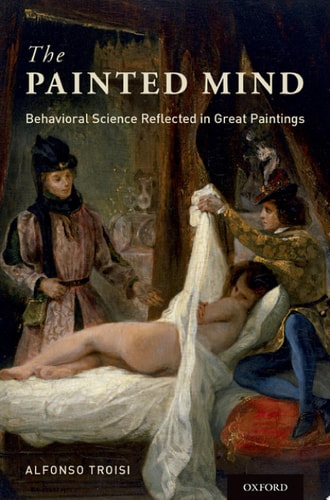
The Painted Mind: Behavioral Science Reflected in Great Paintings
0
0
As an Amazon Associate and affiliate partner, Menrva Books earns from qualifying purchases. Learn more
Author Description
The use of visual art is relatively common in scientific literature, and academic publications sometimes reproduce famous paintings to attract potential readers. When used in this manner, artwork is just a marginal adornment. In The Painted Mind, however, each chapter is inspired by an artistic masterpiece. Throughout the book, Dr. Troisi highlights the artistic significance of each painting and introduces the reader to their creators' biographical stories. The Painted Mind has a scientific focus on the evolutionary analysis of human mind and behavior. Its discussion of emotions and behaviors integrates a variety of perspectives that can ultimately be reduced to the evolutionary distinction between proximate mechanisms and adaptive functions. Although Dr. Troisi is primarily a clinical psychiatrist, his eclectic scientific background-ranging from primate ethology to neuroscience, from behavioral biology to molecular genetics, and from Darwinian psychiatry to evolutionary psychology-gives his writing a unique perspective. In addition to integrating data and findings from each of these disciplines, the book's presentation of evolutionary theories of the human mind is also intermixed with lively discussion of individual cases. Some are clinical cases from Dr. Troisi's own psychiatric practice; others reference the psychological profiles of historical figures and fictional characters.
Menrva's Summary
THE THESIS
This book investigates the intersection of evolutionary biology and human behavior by using famous works of art as a framework for scientific analysis. Dr. Alfonso Troisi, a clinical psychiatrist with an extensive background in primate ethology, neuroscience, and molecular genetics, utilizes these paintings to explore the distinction between proximate mechanisms and adaptive functions. By synthesizing data from diverse disciplines, the author constructs a multidisciplinary argument that explains complex human emotions and behaviors through the lens of evolutionary psychology.
THE SCOPE MAP
What You Will Find
- Evolutionary analysis of human mind and behavior
- Integration of primate ethology, neuroscience, and behavioral biology
- Case studies derived from clinical psychiatric practice
- Psychological profiling of historical figures and fictional characters
THE AUTHORITY PERSPECTIVE
Experts note that the book provides a unique synthesis of art history and evolutionary science, making complex biological concepts accessible through visual interpretation. Readers frequently highlight the author's ability to bridge the gap between clinical psychiatric practice and broader evolutionary theories.
Page Count:
271
Publication Date:
2017-01-01
Publisher:
Oxford University Press
ISBN-10:
0199393427
ISBN-13:
9780199393428
Non-Fiction
Psychology
Medical
Health Care
Behavioral Science
Evolutionary Psychology
Allied Health
Art History
Psychiatry
Community Tags
Similar Books