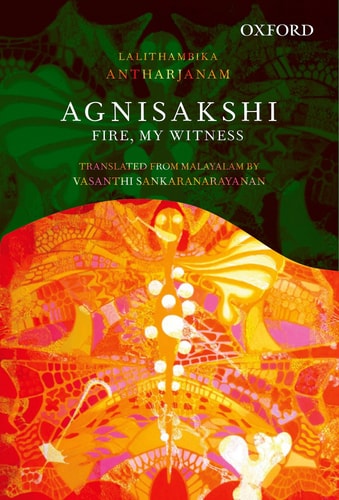
Agnisakshi
0
0
As an Amazon Associate and affiliate partner, Menrva Books earns from qualifying purchases. Learn more
Author Description
The only novel of one of Keralaas leading women writers, Lalithambika Antharjanamas Agnisakshi is a telling account of a womanas life glowing as though purified in the afire of sacrificea. Set against the history of Kerala, and life, customs, habits, and culture of the Namboodiri community, along with the fervent cries of the Indian National Freedom struggle, the characters act out their unforgettable roles: Tethi, the dazzling but disappointed bride who renounces worldly life; Unni Namboodiri, whose adherence to the Vedic way of life destroys his personal happiness; and Thankam, Unnias Nair cousin and the mighty Aphan Namboodirias daughter, seeking her own liberation from the past.True to the lyrical and emotional tone of the original, Vasanthi Sankaranarayananas translation offers a moving portrait of upper-class, upper-caste Kerala society just before and after Independence.
Menrva's Summary
THE PULSE
The novel centers on the internal and external conflicts of a woman navigating the rigid, oppressive structures of the Namboodiri Brahmin community during the Indian independence movement. Devaki, known as Tethi, struggles to reconcile her personal aspirations for freedom with the suffocating traditions of her caste and marriage. She faces opposition from the patriarchal hierarchy and the weight of ancestral expectations that demand her total submission. The narrative explores her eventual renunciation of worldly life as a form of liberation, set against the backdrop of a society undergoing profound political and cultural shifts.
INSIDE THE PAGES
- Examination of the Namboodiri community's customs and social hierarchies
- Integration of the Indian National Freedom struggle as a catalyst for personal change
- Exploration of the theme of sacrifice as a means of purification
- Character-driven narrative focusing on the psychological development of Tethi and Unni Namboodiri
- Lyrical prose style that captures the emotional depth of the original Malayalam text
- Detailed portrayal of upper-caste Kerala society during the pre
- and post-Independence eras
- Use of renunciation as a symbolic act of defiance against patriarchal control
- Intergenerational conflict between traditional values and emerging modern identities
THE COLLECTIVE ECHO
Readers and critics frequently highlight the novel's significance as a foundational work of feminist literature within the context of Kerala's social history. Discussion often centers on the author's ability to balance intimate character studies with the broader political currents of the Indian independence movement. Many observers note that the translation successfully preserves the lyrical quality and emotional resonance of the original text. The work is widely regarded as a poignant critique of the restrictive practices imposed upon women in traditional Brahmin households. Readers appreciate the nuanced portrayal of characters who are caught between the desire for personal autonomy and the heavy burden of cultural heritage.
Page Count:
208
Publication Date:
2015-09-14
Publisher:
Oxford University Press
ISBN-10:
019945700X
ISBN-13:
9780199457007
Literary Fiction
Historical Fiction
Feminist
Social Commentary
India
Indian