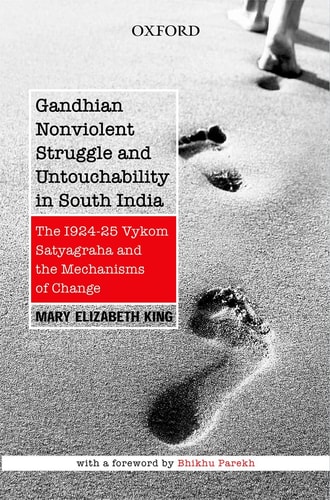
Gandhian Nonviolent Struggle and Untouchability in South India: The 1924-25 Vykom Satyagraha and Mechanisms of Change
0
0
As an Amazon Associate and affiliate partner, Menrva Books earns from qualifying purchases. Learn more
Author Description
In the 1920s, in the south Indian village of Vykom, a nonviolent struggle sought to open to everyone the roads surrounding the Brahmin temple there. For centuries, any person or animal could walk those roads but not the so-called untouchable Hindus, whose use of the roads would "pollute" the high castes. From April 1924 to November 1925, Gandhi waged a satyagraha to put an end to this blatant discrimination.Gandhi believed that the Vykom struggle would eliminate severe practices of untouchability, unapproachability, and unseeability, as the nonviolent activists would "convert" the high castes "by sheer force of character and suffering." Within a decade of the Vykom campaign, a narrative emerged that corroborated Gandhi's beliefs and cited the success of the satyagraha as testimony to his methods.This mythic narrative has persisted to this day; yet fresh evidence presented by King shows that Gandhi's confidence was misguided, and the volunteers' suffering was ineffective in "converting" the upper-caste orthodoxy. This book for the first time explores what actually happened at Vykom, including its controversial settlement. Correcting misunderstandings, it addresses the rarity of conversion as a mechanism of change, and evaluates shortcomings of Gandhi's leadership.
Menrva's Summary
THE THESIS
This book investigates the historical reality of the 1924-25 Vykom Satyagraha to determine whether nonviolent suffering effectively converted high-caste opponents or if the established narrative of Gandhian success is a myth. Mary Elizabeth King, a scholar of nonviolent civil resistance, utilizes primary source documentation and archival evidence to challenge the long-standing belief that the Vykom struggle succeeded through the moral conversion of the orthodox upper castes. By dissecting the specific mechanisms of the campaign, the author argues that the actual outcomes were far more complex and less reliant on the conversion of the opposition than Gandhi’s own rhetoric suggested.
THE SCOPE MAP
What You Will Find
- A detailed historical analysis of the 1924-25 Vykom Satyagraha in South India.
- An evaluation of the effectiveness of nonviolent suffering as a mechanism for social change.
- A critical assessment of Gandhi’s leadership strategies and his theories on caste-based discrimination.
- Evidence-based corrections to the prevailing mythic narrative surrounding the temple road protests.
THE AUTHORITY PERSPECTIVE
Scholars and historians recognize this work as a significant revisionist study that provides a necessary, evidence-based counterpoint to hagiographic accounts of Gandhian activism. Readers frequently note the academic rigor of the text, which serves as a foundational resource for those studying the practical limitations and complexities of nonviolent resistance movements.
Page Count:
368
Publication Date:
2014-10-30
Publisher:
Oxford University Press
ISBN-10:
0199452660
ISBN-13:
9780199452668
History
Biography
Dalits
India
Caste
Social Reform
Nonviolence
Community Tags
Similar Books