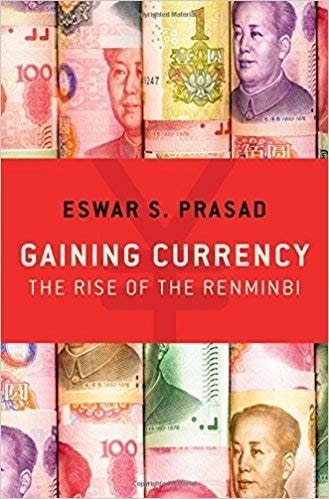
Gaining Currency
0
0
As an Amazon Associate and affiliate partner, Menrva Books earns from qualifying purchases. Learn more
Author Description
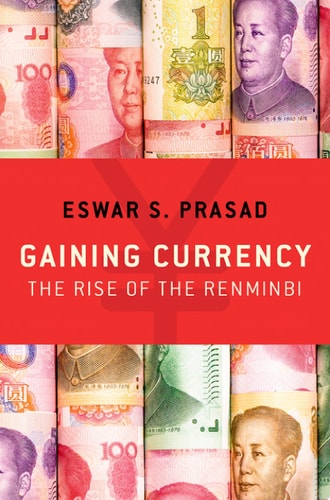
In Gaining Currency, leading China scholar Eswar S. Prasad describes how the renminbi (RMB) is taking the world by storm and explains its role in reshaping global finance. This book sets the recent rise of the RMB, China's currency since 1949, against a sweeping historical backdrop. China issued the world's first paper currency in the 7th century. In the 13th century, Kublai Khan issued the first-ever currency to circulate widely despite not being backed by commodities or precious metals. China also experienced some of the earliest episodes of hyperinflation currency wars. Gaining Currency reveals the interconnections linking China's growing economic might, its expanding international influence, and the rise of its currency. If China plays its cards right by adopting reforms that put its economy and financial markets on the right track, the RMB could rival even the euro and the Japanese yen. Prasad shows, however, that while China has successfully adopted a unique playbook for promoting the RMB, many pitfalls lie ahead for its economy and currency that could limit the RMB's ascendance. The Chinese leadership is pursuing financial liberalization and limited market-oriented reforms, but it has unequivocally repudiated political, legal, and institutional reforms. Therefore, Prasad argues, while the RMB is likely to become a significant reserve currency, it will not attain "safe haven" status as a currency to which investors turn during crises. In short, the hype predicting the RMB's inevitable rise to global dominance is overblown. Gaining Currency makes a compelling case that, for all its promise, the RMB does not pose a serious challenge to the U.S. dollar's dominance in international finance.
Menrva's Summary
THE THESIS
This book investigates the trajectory of the Chinese renminbi (RMB) and evaluates its potential to challenge the U.S. dollar as a dominant global reserve currency. Eswar S. Prasad, a prominent China scholar and economist, utilizes historical data and contemporary financial analysis to examine the intersection of China's economic growth and its international monetary influence. He argues that while the RMB is gaining significance, structural limitations and the Chinese government's refusal to implement necessary institutional reforms will prevent it from achieving true safe-haven status in the global financial system.
THE SCOPE MAP
What You Will Find
- Historical analysis of China's currency evolution from the 7th century to the present.
- Examination of the relationship between economic liberalization and political institutional constraints.
- Comparative assessment of the RMB against the U.S. dollar, the euro, and the Japanese yen.
- Evaluation of the risks and pitfalls inherent in China's current financial reform playbook.
THE AUTHORITY PERSPECTIVE
Experts recognize this work as a balanced and rigorous analysis of China's monetary policy and its implications for global finance. Readers frequently note the clarity with which Prasad navigates complex economic concepts while maintaining a grounded, skeptical outlook on the inevitability of the RMB's global dominance.
Page Count:
344
Publication Date:
2016-11-03
Publisher:
Oxford
ISBN-10:
0199474699
ISBN-13:
9780199474691
Economics
Finance
China
International relations
Currency
Community Tags
Other Editions(3)
Similar Books



Reader Comments
Share Your Thoughts
No comments yet. Be the first to share your thoughts!