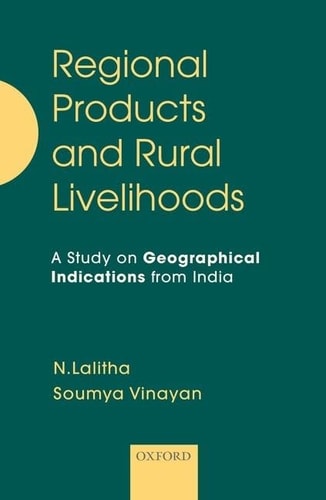
Regional Products and Rural Livelihoods: A Study on Geographical Indications from India
0
0
As an Amazon Associate and affiliate partner, Menrva Books earns from qualifying purchases. Learn more
Author Description
Labeling products with emphasis on origin has been a long tradition in the realm of trade to convey the quality of the product. With entry into the WTO, India which has a long tradition of origin labeling across various agricultural, crafts and textile products, brought in a legal framework to legally recognize Geographical Indications (GIs) in accordance with the TRIPS agreement. This book, through select case studies of textiles and crafts in South India, looks at the registration and use of GIs within the legal framework. The book explores the process of registration of GI, involvement of stakeholders in the valorization of the reputation and the challenges in governance for institutionalizing and implementing the legal framework to improve the livelihoods of the producers of such products. The book highlights the need for collective action among the stakeholders along the value chain to realize the economic gains from such use of GI (with the emphasis on the inextricable link between geography and quality) and resultant outcomes such as improved livelihoods for producers and authentic products for the consumers who are willing to pay a higher price for quality and authenticity.
Menrva's Summary
THE THESIS
This book investigates whether the legal framework of Geographical Indications (GIs) in India effectively translates into improved economic livelihoods for rural producers of traditional crafts and textiles. The authors, N. Lalitha and Soumya Vinayan, utilize their expertise in development economics and policy to analyze the intersection of international trade agreements, such as TRIPS, and local production practices. By examining the registration process and stakeholder involvement, the authors argue that the success of GIs depends heavily on collective action across the value chain to ensure that economic gains reach the original producers rather than intermediaries.
THE SCOPE MAP
What You Will Find
- Analysis of the legal framework for Geographical Indications in India post-WTO entry.
- Case studies focusing on specific textile and craft industries in South India.
- Examination of the challenges in governance and institutionalization of GI protections.
- Evaluation of the link between geographic origin, product quality, and consumer willingness to pay.
THE AUTHORITY PERSPECTIVE
Experts in the field of intellectual property and rural development highlight this work as a practical assessment of how international trade policies impact local artisans. Readers frequently note the book's focus on the operational difficulties of implementing legal frameworks in decentralized rural economies.
Page Count:
236
Publication Date:
2019-05-28
Publisher:
Oxford University Press
ISBN-10:
0199489696
ISBN-13:
9780199489695
Economics
Kindle eBooks
Law
Agriculture
Categories
Textile Fabrics_india
India
Sociology
World Trade Organization
Kindle Store
Community Tags
Similar Books