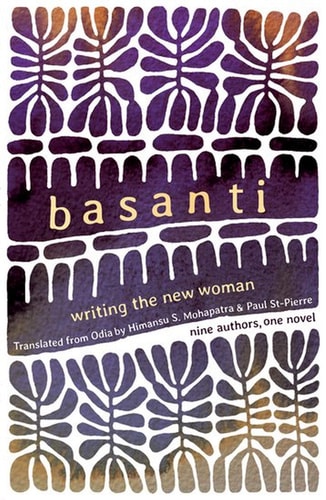
Basanti: Writing the New Woman
Author Description
Serialised in Utkala Sahitya between May 1925 and November 1927 and published as a book in 1931, Basanti is a landmark attempt at writing a new kind of novel in Odisha. It is new at least in three senses. It is a product of a well thought out plan for collaborative writing. It is a novel with a focus on women. It is a novel of ideas. Nine young authors, six men and three women, belonging to the 'Sabuja Age' in Odia literature, a short-lived but immensely creative and restless period of roughly ten to fifteen years, came together to write this novel. Written against the backdrop of the political and social ferment of the time, marked by Gandhi's nationalist movement and the rising regional aspiration for state formation, Basanti is the first fictional declaration of the independence of the Odia woman. It is also the first and the last exemplar of the collective novel in Odisha.
Menrva's Summary
THE THESIS
This work investigates the historical and literary significance of the collaborative novel 'Basanti' as a foundational text for the emergence of the 'new woman' in early 20th-century Odia literature. Professors Himansu S. Mohapatra and Paul St-Pierre analyze the unique circumstances of the novel's creation, which involved nine authors from the 'Sabuja Age' working in tandem. By situating the text within the political climate of the Gandhian nationalist movement and regional state-building efforts, the authors argue that 'Basanti' serves as a critical document for understanding gender roles and intellectual discourse in pre-independence Odisha.
THE SCOPE MAP
What You Will Find
- A detailed examination of the 'Sabuja Age' in Odia literature and its creative output.
- Analysis of the collaborative writing methodology employed by the nine contributing authors.
- Historical context regarding the nationalist movement and regional identity formation in Odisha.
- Critical evaluation of the novel's thematic focus on female agency and independence.
THE AUTHORITY PERSPECTIVE
Scholars recognize this volume as a vital resource for understanding the intersection of collective authorship and social reform in regional Indian literature. The text is noted for its ability to bridge the gap between historical archival research and literary analysis for contemporary readers.
Page Count:
276
Publication Date:
2019-06-04
Publisher:
Oxford University Press
ISBN-10:
0199489866
ISBN-13:
9780199489862
History
Asian
Literary Criticism
Community Tags
Similar Books