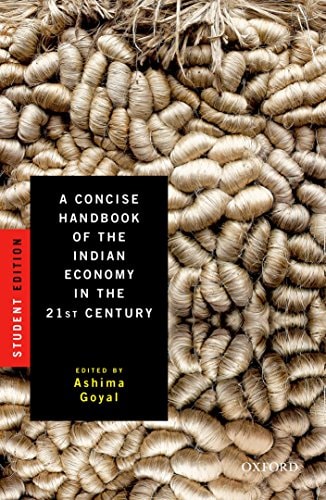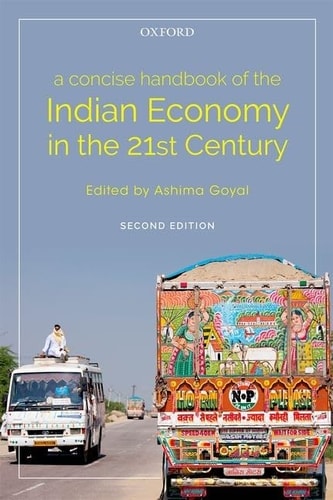
A Concise Handbook of the Indian Economy in the 21st Century
0
0
As an Amazon Associate and affiliate partner, Menrva Books earns from qualifying purchases. Learn more
Author Description
After liberalization in the 1990s, growth rates were higher but were more volatile. The countries that did manage to sustain a high rate of growth followed a pragmatic reform path, which was neither a pure market nor a government-led approach. However, such pragmatic reform requires a deep knowledge of the economy derived from careful fact-based research. This volume contributes to the required knowledge on a range of issues such as drivers of growth, domestic reforms compared to external reforms, macroeconomic policy coordination, macroeconomic policy institutions and practices, the effect of openness and of global economic integration, poverty and the degree of inclusion, bottlenecks in infrastructure, and the performance of major sectors such as agriculture, industry and finance. The essays provide a finer understanding of the interaction between domestic strengths, external opportunities and government interventions.
Menrva's Summary
THE THESIS
This volume investigates the structural drivers and policy frameworks necessary to sustain India's economic growth in the post-liberalization era. Ashima Goyal, a distinguished economist, synthesizes empirical research to evaluate the efficacy of pragmatic reform paths that balance market mechanisms with government intervention. The text provides a rigorous analysis of how domestic policy institutions and global integration interact to influence long-term development outcomes.
THE SCOPE MAP
What You Will Find
- Analysis of macroeconomic policy coordination and institutional practices.
- Evaluation of growth drivers including infrastructure bottlenecks and sectoral performance in agriculture, industry, and finance.
- Comparative study of domestic versus external reform impacts.
- Assessment of poverty reduction strategies and the degree of economic inclusion.
THE AUTHORITY PERSPECTIVE
Experts identify this work as a vital resource for understanding the complexities of the Indian economy during the 21st century. Readers frequently note the academic density of the prose, which serves as a foundational text for students and policy practitioners alike.
Page Count:
480
Publication Date:
2020-01-01
Publisher:
Oxford University Press
ISBN-10:
0199496463
ISBN-13:
9780199496464
Economics
India
Macroeconomics
Public Policy