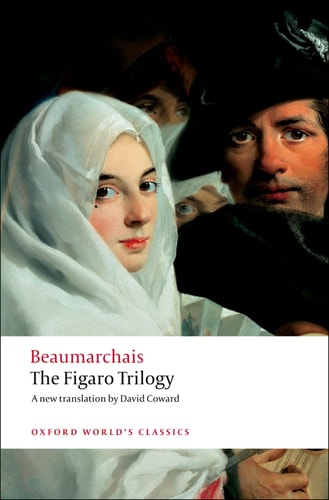
The Figaro Trilogy: The Barber of Seville, The Marriage of Figaro, The Guilty Mother
0
0
As an Amazon Associate and affiliate partner, Menrva Books earns from qualifying purchases. Learn more
Author Description
Eighteenth-century France produced only one truly international theater star, Beaumarchais, and only one name, Figaro, to combine with Don Quixote and D'Artagnan in the ranks of popular myth. But who was Figaro? He was quickly appropriated by Mozart and Rossini who tamed the original impertinent, bustling servant for their own purposes. On the eve of the French Revolution Figaro was seen as a threat to the establishment and Louis XIV even banned The Marriage of Figaro.Was the barber of Seville really a threat to aristocratic heads, or a bourgeois individualist like his creator? The three plays in which he plots and schemes chronicle the slide of the ancien régime into revolution but they also chart the growth of Beaumarchais' humanitarianism. They are exuberant theatrical entertainments, masterpieces of skill, invention, and social satire which helped shape the direction of French theater for a hundred years. This lively new translation catches all the zest and energy of the most famous valet in French literature.About the Series: For over 100 years Oxford World's Classics has made available the broadest spectrum of literature from around the globe. Each affordable volume reflects Oxford's commitment to scholarship, providing the most accurate text plus a wealth of other valuable features, including expert introductions by leading authorities, voluminous notes to clarify the text, up-to-date bibliographies for further study, and much more.
Menrva's Summary
THE PULSE
The central conflict arises from the clever valet Figaro’s attempts to navigate the rigid social hierarchies of eighteenth-century France while outwitting his aristocratic masters. Figaro acts as the primary catalyst for change, utilizing his wit and resourcefulness to secure his own happiness and expose the moral failings of the nobility. Opposing him are various aristocrats who rely on tradition and power to maintain their status, creating a dynamic of constant tension and comedic maneuvering. The narrative framework consists of three distinct plays that follow a chronological progression, moving from lighthearted farce to more complex social commentary as the political climate shifts toward revolution.
INSIDE THE PAGES
- Sharp, rapid-fire dialogue that emphasizes wit and social critique.
- Archetypal characters representing the tension between the servant class and the aristocracy.
- Intricate plot structures involving elaborate schemes, disguises, and misunderstandings.
- Satirical exploration of the ancien régime’s moral and political decay.
- Evolution of the protagonist from a bustling servant to a more reflective individualist.
- Thematic focus on humanitarianism and the questioning of inherited privilege.
- Exuberant theatrical energy designed for performance and audience engagement.
- Historical context provided through the lens of pre-revolutionary French society.
THE COLLECTIVE ECHO
Readers and critics frequently highlight the enduring vitality of Beaumarchais’ writing, noting how the plays balance slapstick humor with biting political commentary. Discussion often centers on the transformation of Figaro from a simple comedic archetype into a symbol of bourgeois individualism and social defiance. Scholars emphasize the importance of these texts in shaping the trajectory of French theater and their influence on subsequent operatic adaptations. The consensus suggests that while the plays are deeply rooted in their specific historical moment, their exploration of power dynamics remains relevant to contemporary audiences. Readers often appreciate the translation’s ability to maintain the original zest and rhythmic energy of the dialogue throughout the collection.
Page Count:
352
Publication Date:
2008-08-01
Publisher:
Oxford University Press
ISBN-10:
0199539979
ISBN-13:
9780199539970
Drama
Classics
Satire
French literature
Dramatic works
Plays
Comedy
Community Tags
Similar Books