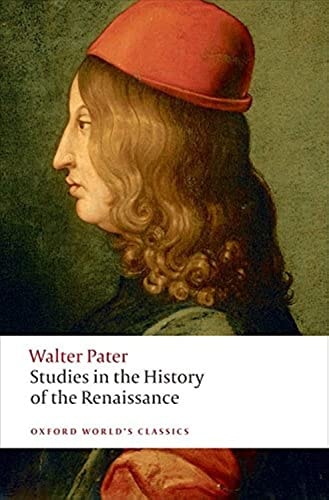
Studies in the History of the Renaissance
0
0
As an Amazon Associate and affiliate partner, Menrva Books earns from qualifying purchases. Learn more
Author Description
Through his highly idiosyncratic readings of some of the finest paintings, sculptures, and poems of the French and Italian Renaissance, Walter Pater in Studies in the History of the Renaissance redefined the practice of criticism as an impressionistic, almost erotic exploration of the critic's aesthetic responses. Pater's infamous "Conclusion," which forever linked him with the decadent movement, scandalized many with its insistence on making pleasure the sole motive of life, even as it charmed fellow aesthetes such as Oscar Wilde. This edition of Studies reproduces the text of the first edition of 1873. Matthew Beaumont's Introduction describes the cultural context that gave rise to the book, the reasons for its notoriety, Pater's philosophical outlook, and the arguments in his book. It explores Pater's work as an attempt to preserve the unique aesthetic of a work of art in the face of encroaching mass culture. The book also includes the later chapter on Giorgione as an Appendix, comprehensive notes that identify the many literary and artistic references, and a useful glossary of names.About the Series: For over 100 years Oxford World's Classics has made available the broadest spectrum of literature from around the globe. Each affordable volume reflects Oxford's commitment to scholarship, providing the most accurate text plus a wealth of other valuable features, including expert introductions by leading authorities, voluminous notes to clarify the text, up-to-date bibliographies for further study, and much more.
Menrva's Summary
THE THESIS
Walter Pater investigates the intersection of aesthetic experience and historical criticism, arguing that the primary purpose of art appreciation is the cultivation of intense, subjective pleasure. Pater, a seminal figure in the aesthetic movement, utilizes his background in classical studies and art history to reframe the Renaissance not as a rigid historical period, but as a series of fleeting, sensory impressions. By prioritizing the individual's emotional response to a work of art over objective historical analysis, he challenges traditional academic methodologies of his time. This edition, supported by Matthew Beaumont's scholarly introduction, contextualizes Pater's radical philosophy within the cultural tensions of the late nineteenth century.
THE SCOPE MAP
What You Will Find
- Detailed analyses of French and Italian Renaissance paintings, sculptures, and poetry.
- An exploration of the 'Conclusion' and its influence on the decadent movement and aestheticism.
- Historical context regarding the rise of mass culture and the preservation of unique artistic experiences.
- Scholarly apparatus including comprehensive notes, a glossary of names, and the inclusion of the chapter on Giorgione.
THE AUTHORITY PERSPECTIVE
Experts recognize this work as a foundational text for the aesthetic movement and a pivotal shift in the history of literary criticism. Readers frequently note the dense, evocative prose style that reflects the very impressionistic philosophy Pater advocates.
Page Count:
240
Publication Date:
2010-04-15
Publisher:
Oxford University Press
ISBN-10:
0199535078
ISBN-13:
9780199535071
Philosophy
Renaissance
Art History
Aesthetics
Literary Criticism
Community Tags
Similar Books