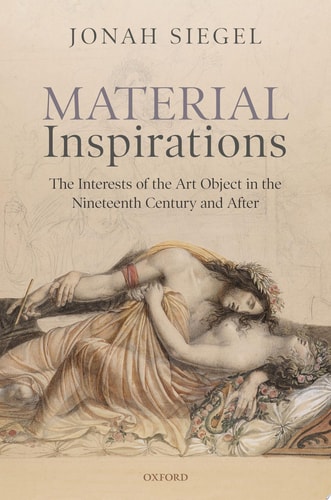
Material Inspirations
0
0
As an Amazon Associate and affiliate partner, Menrva Books earns from qualifying purchases. Learn more
Author Description
This book is a study of the complex relationship between matter and idea that shaped the nineteenth-century culture of art, and that in turn determined the course of still-current accounts of art's nature and value. Fundamental questions about the effects of material conditions on the creation and reception of art arose as early as the nineteenth century, and put important pressures on later eras. The place of class distinctions in the making and reception of art, the relationship between copy and original, the effects of display on art appreciation, even the role of pleasure itself: this book treats these and related issues as productive conceptual challenges with an unresolved relationship to matter at their core. Drawing on recent scholarship on the history of art and its institutions, Material Inspirations places cultural developments such as the emergence of new sites for exhibition and the astonishing proliferation of printed reproductions alongside a wide range of texts including novels, poems, travel guidebooks, compendia of antiquities, and especially the great line of critical writing that emerged in the period. The study vivifies a dynamic era, which is still too often seen as static and unchanging, by emphasizing the transformations taking place throughout the period in precisely those areas that have appeared to promise little more than repetition or continuity: collection, exhibition, and reproduction. The book culminates with the two great critics of the period, John Ruskin and Walter Pater, but it also includes close analysis of other prose writers, as well as poets and novelists ranging from William Blake to Robert Browning, George Eliot to Henry James. Significant developments addressed include the vogue for the representation of old masters in the first half of the century, ongoing innovations in the creation and diffusion of reproductions, and the emergence of the field of art history itself.
Menrva's Summary
THE THESIS
This book investigates the complex, unresolved relationship between material conditions and conceptual ideas that defined nineteenth-century art culture and continues to influence contemporary understandings of art's value. Jonah Siegel, a scholar of nineteenth-century literature and culture, utilizes a multidisciplinary approach to examine how institutional developments like exhibition spaces and mass reproduction shaped artistic reception. He argues that the period was not static, but rather a dynamic era of transformation that established the foundational tensions still present in modern art history.
THE SCOPE MAP
What You Will Find
- Analysis of nineteenth-century cultural institutions including museums, galleries, and exhibition sites.
- Examination of the impact of printed reproductions and the proliferation of art media.
- Close readings of diverse texts ranging from novels and poetry to travel guidebooks and critical essays.
- Theoretical exploration of class distinctions, the copy-versus-original debate, and the role of display in art appreciation.
Scope Limits
- The study focuses primarily on the nineteenth century and does not provide a comprehensive history of art beyond the early twentieth-century transition.
- It does not offer a technical manual on art conservation or physical material science.
THE AUTHORITY PERSPECTIVE
Scholars recognize this work as a rigorous contribution to the intersection of literary studies and art history. Readers frequently note the academic density of the prose and the depth of the author's engagement with figures like John Ruskin and Walter Pater.
Page Count:
448
Publication Date:
2020-01-01
Publisher:
Oxford University Press
ISBN-10:
0192599968
ISBN-13:
9780192599964
Cultural History
Aesthetics
Literary Criticism
Nineteenth century
Art History
Community Tags
Similar Books