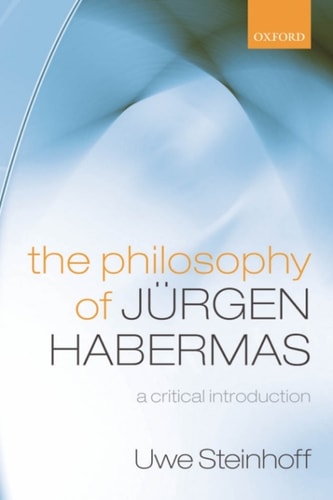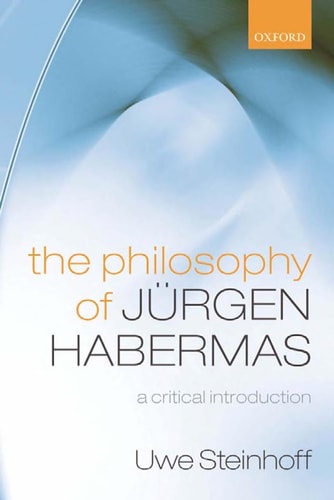
The Philosophy of Jurgen Habermas: A Critical Introduction
0
0
As an Amazon Associate and affiliate partner, Menrva Books earns from qualifying purchases. Learn more
Author Description
Jürgen Habermas seeks to defend the Enlightenment and with it an "emphatical", "uncurtailed" conception of reason against the post-modern critique of reason on the one hand, and against so-called scientism (which would include critical rationalism and the greater part of analytical philosophy) on the other. His objection to the former is that it is self-contradictory and politically defeatist; his objection to the latter is that, thanks to a standard of rationality derived from the natural sciences or from Weber's concept of purposive rationality, it leaves normative questions to irrational decisions. Habermas wants to offer an alternative, trying to develop a theory of communicative action that can clarify the normative foundations of a critical theory of society as well as provide a fruitful theoretical framework for empirical social research.This study is a comprehensive and detailed analysis and sustained critique of Habermas' philosophical system since his pragmatist turn in the seventies. It clearly and precisely depicts Habermas' long chain of arguments leading from an analysis of speech acts to a discourse theory of law and the democratic constitutional state. Along the way the study examines, among other things, Habermas' theory of communicative action, transcendental and universal pragmatics and the argument from "performative contradictions", discourse ethics, the consensus theory of truth, Habermas' ideas on developmental psychology, communicative pathologies and social evolution, his theory of social order, the analysis of the tensions between system and lifeworld, his theory of modernity, and his theory of deliberative democracy. For all Habermas students this study will prove indispensable.
Menrva's Summary
THE THESIS
This work investigates whether Jürgen Habermas successfully defends the Enlightenment conception of reason against both postmodern critique and scientism. Uwe Steinhoff provides a systematic examination of Habermas' philosophical evolution, focusing on the transition toward a theory of communicative action. By analyzing the logical structure of Habermas' arguments, the author evaluates the viability of his normative foundations for critical social theory and democratic governance.
THE SCOPE MAP
What You Will Find
- Analysis of the theory of communicative action and universal pragmatics
- Examination of discourse ethics and the consensus theory of truth
- Critique of the tension between system and lifeworld
- Evaluation of deliberative democracy and the constitutional state
THE AUTHORITY PERSPECTIVE
Experts recognize this text as a rigorous, high-level engagement with Habermas' complex philosophical system. Readers frequently note the technical density of the prose, which is intended for advanced students and scholars of political philosophy.
Page Count:
286
Publication Date:
2009-08-31
Publisher:
Oxford University Press
ISBN-10:
0199547807
ISBN-13:
9780199547807
Philosophy
Social Theory
Sociology
Critical Theory
Community Tags
Similar Books