Dialectic of Enlightenment
0
0
As an Amazon Associate and affiliate partner, Menrva Books earns from qualifying purchases. Learn more
Author Description
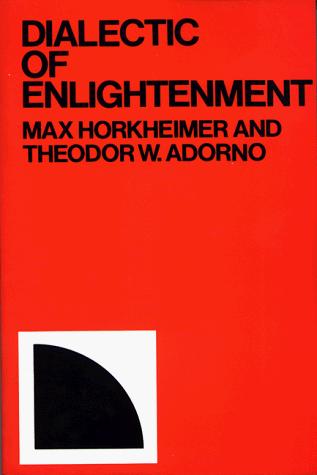
Dialectic of Enlightenment is a seminal work of 20th-century social theory by Theodor W. Adorno and Max Horkheimer, first published in 1944. It explores the paradox of Enlightenment: how the very drive for reason and liberation from myth has paradoxically led to new forms of domination and barbarism. The authors argue that instrumental reason, the logic of control and manipulation, has become dominant, leading to the 'culture industry' that pacifies and manipulates the masses, and ultimately to the rise of fascism. The book examines various cultural phenomena, from mythology and art to popular culture, to illustrate this dialectic.
Menrva's Summary
THE THESIS
The Dialectic of Enlightenment investigates the paradox of how humanity's drive for reason and progress has led to new forms of barbarism and domination. Adorno and Horkheimer argue that the Enlightenment's emphasis on instrumental reason, while liberating humanity from myth, ultimately led to the reification of nature and the subjugation of individuals. They trace this dialectic through various cultural phenomena, including mythology, art, and mass culture, demonstrating how the very tools of liberation became instruments of control. The work critiques the administered society and the loss of individuality in the face of totalizing systems.
THE SCOPE MAP
- Analysis of the relationship between myth and Enlightenment reason.
- Critique of instrumental reason and its role in domination.
- Examination of the culture industry and its impact on individual autonomy.
- Exploration of antisemitism as a manifestation of the Enlightenment's dark side.
- Discussion of the concept of reification and its social consequences.
- Analysis of Odysseus as a figure embodying the Enlightenment's ambivalent nature.
- Critique of positivism and its limitations in understanding society.
THE AUTHORITY PERSPECTIVE
The Dialectic of Enlightenment is a foundational text of the Frankfurt School, widely recognized for its profound and often challenging critique of modernity. Scholars generally acknowledge its significant influence on social theory, cultural studies, and philosophy, particularly for its insights into the paradoxes of reason and domination. While some find its arguments dense and pessimistic, its core theses regarding the culture industry and instrumental reason remain subjects of intense debate and analysis. The book is considered essential reading for understanding 20th-century critical thought and its enduring relevance to contemporary societal issues.
Page Count:
192
Publication Date:
1976-01-01
ISBN-10:
0826400930
ISBN-13:
9780826400932
Non-Fiction
History
Philosophy
Science
Critical Theory
Social Theory
Community Tags
Similar Books