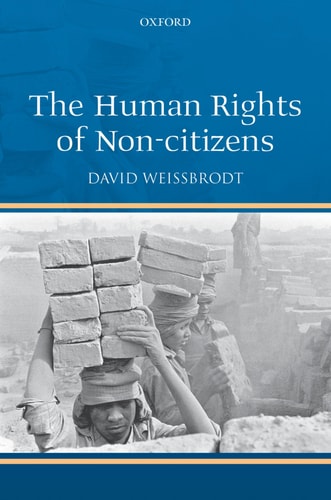
The Human Rights of Non-citizens
0
0
As an Amazon Associate and affiliate partner, Menrva Books earns from qualifying purchases. Learn more
Author Description
Non-citizens include asylum seekers, rejected asylum seekers, immigrants, non-immigrants, migrant workers, refugees, stateless persons, and trafficked persons. This book argues that regardless of their citizenship status, non-citizens should, by virtue of their essential humanity, enjoy all human rights unless exceptional distinctions serve a legitimate State objective and are proportional to the achievement of that objective. Non-citizens should have freedom from arbitrary arrest, arbitrary killing, child labor, forced labor, inhuman treatment, invasions of privacy, refoulement, slavery, unfair trial, and violations of humanitarian law. Additionally, non-citizens should have the right to consular protection; equality; freedom of religion and belief; labor rights (for example, as to collective bargaining, workers' compensation, healthy and safe working conditions, etc.); the right to marry; peaceful association and assembly; protection as minors; social, cultural, and economic rights.There is a large gap, however, between the rights that international human rights law guarantee to non-citizens and the realities they face. In many countries, non-citizens are confronted with institutional and endemic discrimination and suffering. The situation has worsened since September 11, 2001, as several governments have detained or otherwise violated the rights of non-citizens in response to fears of terrorism. This book attempts to understand and respond to the challenges of international human rights law guarantees for non-citizens human rights.
Menrva's Summary
THE THESIS
This book investigates the fundamental question of whether non-citizens are entitled to the same human rights protections as citizens under international law. David Weissbrodt, a recognized expert in international human rights law, utilizes a comprehensive analysis of international treaties and state practices to argue that essential humanity, rather than legal citizenship, should serve as the primary basis for rights. He asserts that any state-imposed restrictions on these rights must be strictly limited to those that are proportional and serve a legitimate, non-discriminatory objective.
THE SCOPE MAP
What You Will Find
- A detailed taxonomy of non-citizen categories including refugees, asylum seekers, and stateless persons.
- An analysis of specific rights such as freedom from arbitrary arrest, labor protections, and the right to due process.
- A critical examination of how post-9/11 security policies have exacerbated institutional discrimination against non-citizens.
- A framework for evaluating state compliance with international human rights standards regarding migrant populations.
THE AUTHORITY PERSPECTIVE
Legal scholars and human rights practitioners frequently cite this work as a foundational text for understanding the intersection of immigration policy and international law. Experts highlight the clinical precision of the author's arguments and the clarity with which he navigates complex international legal instruments.
Page Count:
264
Publication Date:
2008-08-15
Publisher:
Oxford University Press
ISBN-10:
0199547823
ISBN-13:
9780199547821
International Law
Sociology
Human rights
aliens
Community Tags
Other Editions(2)
Similar Books