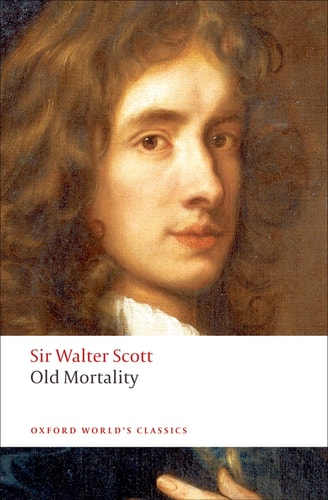
Old Mortality
0
0
As an Amazon Associate and affiliate partner, Menrva Books earns from qualifying purchases. Learn more
Author Description
Old Mortality (1816), which many consider the finest of Scott's Waverley novels, is a swift-moving historical romance that places an anachronistically liberal hero against the forces of fanaticism in seventeenth-century Scotland, in the period infamous as the `killing time'. Its central character, Henry Morton, joins the rebels in order to fight Scotland's royalist oppressors, little as he shares the Covenanters' extreme religious beliefs. He is torn between his love for a royalist's granddaughter and his loyalty to his downtrodden countrymen.As well as being a tale of divided loyalties, the novel is a crucial document in the cultural history of modern Scotland. Scott, himself a supporter of the union between Scotland and England, was trying to exorcise the violent past of a country uncomfortably coming to terms with its status as part of a modern United Kingdom. This novel is in itself a significant political document, in which Scott can be seen to be attempting to create a new centralist Scottish historiography, which is not the political consensus of his own time, the seventeenth century, or today.About the Series: For over 100 years Oxford World's Classics has made available the broadest spectrum of literature from around the globe. Each affordable volume reflects Oxford's commitment to scholarship, providing the most accurate text plus a wealth of other valuable features, including expert introductions by leading authorities, voluminous notes to clarify the text, up-to-date bibliographies for further study, and much more.
Menrva's Summary
THE PULSE
Henry Morton finds himself caught in the violent religious and political upheaval of seventeenth-century Scotland, forced to choose between his personal conscience and the conflicting demands of warring factions. As a protagonist who values moderation, Morton is thrust into the center of the Covenanter rebellion against royalist forces. He must navigate a landscape defined by extreme religious fervor and brutal civil conflict, all while attempting to maintain his integrity and his affection for a woman on the opposing side. The narrative employs a third-person perspective to examine the tension between individual identity and the crushing weight of national history.
INSIDE THE PAGES
- Exploration of the conflict between Covenanters and royalist forces
- Examination of the seventeenth-century Scottish 'killing time'
- Character-driven tension between personal love and political loyalty
- Integration of historical events with fictional narrative arcs
- Use of a moderate hero to critique religious and political extremism
- Detailed depiction of the Scottish landscape and social hierarchy
- Analysis of the union between Scotland and England
- Focus on the development of a centralist Scottish historiography
THE COLLECTIVE ECHO
Readers and critics frequently identify this work as a pinnacle of the Waverley novels, noting its ability to balance intense historical drama with nuanced character development. Discussion often centers on Scott's portrayal of religious fanaticism and the way he uses the protagonist to bridge the gap between opposing ideologies. Many observers highlight the novel's significance as a political document that reflects the author's own complex views on Scottish identity and national unity. The pacing is often praised for its momentum, which keeps the reader engaged despite the dense historical context provided throughout the text.
Page Count:
558
Publication Date:
2009-08-03
Publisher:
Oxford University Press
ISBN-10:
0199555303
ISBN-13:
9780199555307
Adventure
Romance
classic
War fiction
Political fiction
Historical
Scotland
Community Tags
Similar Books