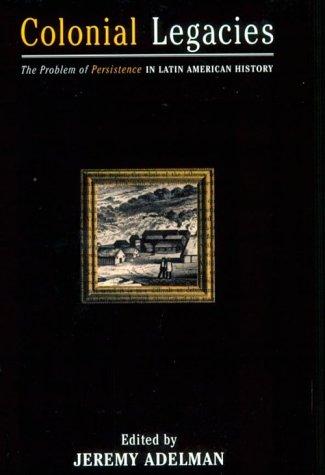
Colonial Legacies
0
0
As an Amazon Associate and affiliate partner, Menrva Books earns from qualifying purchases. Learn more
Author Description
More than other Atlantic societies, Latin America is shackled to its past. This collection is an exploration of the binding historical legacies--the making of slavery, patrimonial absolutist states, backward agriculture and the imprint of the Enlightenment--with which Latin America continues to grapple. Leading writers and scholars reflect on how this heritage emerged from colonial institutions and how historians have tackled these legacies over the years, suggesting that these deep encumbrances are why the region has failed to live up to liberal-capitalist expectations. They also invite discussion about the political, economic and cultural heritages of Atlantic colonialism through the idea that persistence is a powerful organizing framework for understanding particular kinds of historical processes.
Menrva's Summary
THE THESIS
This collection investigates the enduring impact of colonial legacies on contemporary Latin America. The book explores how historical institutions, including slavery, patrimonial absolutist states, and the imprint of the Enlightenment, continue to shape the region's political, economic, and cultural landscapes. Leading scholars examine the emergence of these legacies from colonial structures and how historians have interpreted them over time, arguing that these deep-seated encumbrances hinder the region's ability to meet liberal-capitalist expectations. The work frames persistence as a powerful lens for understanding historical processes.
THE SCOPE MAP
- Exploration of the making of slavery as a binding historical legacy.
- Analysis of patrimonial absolutist states and their lasting influence.
- Examination of backward agriculture and its historical imprint.
- The role of the Enlightenment in shaping colonial institutions and their aftermath.
- Reflection on how historians have grappled with these legacies over time.
- Discussion of the political, economic, and cultural heritages of Atlantic colonialism.
- The concept of persistence as an organizing framework for historical analysis.
THE AUTHORITY PERSPECTIVE
This collection is likely to be regarded as a significant academic contribution, offering a nuanced perspective on the persistent influence of colonial history in Latin America. The scholarly essays provide in-depth analyses of key historical structures and their ongoing impact, appealing to specialists in Latin American history and post-colonial studies. The framing of 'persistence' as an analytical tool suggests a focus on long-term historical processes and their tangible effects on contemporary societies. The work invites critical engagement with how the past continues to shape the region's development and its challenges in achieving economic and political stability.
Page Count:
318
Publication Date:
1999-01-01
ISBN-10:
041592152X
History
Economics
Non-Fiction
Latin America
Enlightenment
Slavery
Colonialism
Community Tags
Similar Books