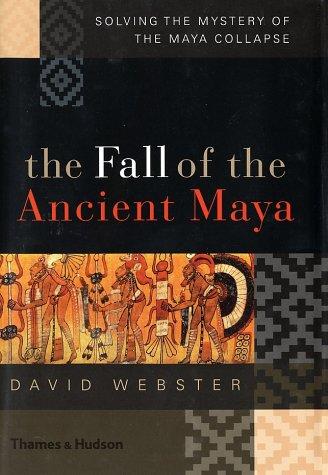
The Fall of the Ancient Maya
0
0
As an Amazon Associate and affiliate partner, Menrva Books earns from qualifying purchases. Learn more
Author Description
Ancient Maya civilization thrived in the tropics of Central America for more than a thousand years and produced some of the world's finest architecture and art. Then it mysteriously vanished, leaving a landscape of ruins smothered by forests. The Classic Maya collapse is one of the great puzzles of history, ranking alongside the Fall of Rome as an enigma that has intrigued scholars for generations. Drawing upon recent archaeological research and hieroglyphic decipherments, David Webster evaluates the theories and dispels the myths surrounding this contentious topic. Contrary to popular belief, not all Maya centers were abandoned, and Spanish explorers of the 16th century encountered still-vigorous Maya polities. Yet the Maya of the southern Lowlands did suffer a calamitous decline beginning in the late 8th century AD. Monuments were no longer carved, royal buildings ceased to be constructed or maintained and whole populations dwindled or simply moved away. What brought about this collapse? Webster paints a picture of a brittle Late Classic world. Ambitious kings, scheming nobles and courtly extravagance are set against a backdrop of ever-more destructive wars and an exploding population that led to unsustainable stress on cultivable land. Without the means to intensify agricultural production, the system simply failed.--BOOK JACKET.
Menrva's Summary
THE THESIS
The Classic Maya collapse remains one of history's most enduring puzzles, with a once-thriving civilization mysteriously vanishing from the tropical lowlands of Central America. David L. Webster, drawing on recent archaeological research and hieroglyphic decipherments, critically examines the various theories and dispels common myths surrounding this complex event. He argues that the decline, beginning in the late 8th century AD, was not a universal abandonment but a calamitous failure of a brittle Late Classic system. The book details how ambitious rulers, courtly extravagance, escalating warfare, and an unsustainable population placed immense stress on agricultural resources, ultimately leading to the system's collapse.
THE SCOPE MAP
- Analysis of recent archaeological findings and deciphered hieroglyphs related to the Maya collapse.
- Evaluation of competing theories and myths surrounding the abandonment of Maya centers.
- Discussion of the political and social structures of the Late Classic Maya, including kings, nobles, and courtly life.
- Examination of the role of warfare and population growth in stressing agricultural systems.
- Exploration of the environmental and resource management challenges faced by the Maya.
- Clarification that not all Maya centers were abandoned, with evidence of continued Maya polities encountered by 16th-century explorers.
THE AUTHORITY PERSPECTIVE
David L. Webster's "The Fall of the Ancient Maya" is recognized for its rigorous examination of a pivotal moment in Mesoamerican history. The book is lauded for synthesizing recent archaeological discoveries and linguistic breakthroughs to offer a nuanced perspective on the Maya collapse. It effectively challenges popular notions by detailing the complex interplay of political ambition, environmental pressures, and societal structures that contributed to the decline. The work is considered a significant contribution to understanding the intricate factors that led to the transformation of Maya civilization.
Page Count:
368
Publication Date:
2002-01-01
ISBN-10:
0500051135
ISBN-13:
9780500051139
Non-Fiction
History
Archaeology
Community Tags
Similar Books