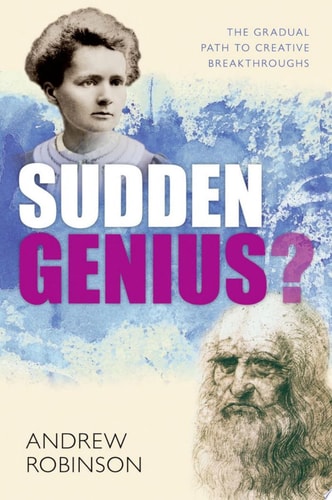
Sudden Genius: The Gradual Path to Creative Breakthroughs
0
0
As an Amazon Associate and affiliate partner, Menrva Books earns from qualifying purchases. Learn more
Author Description
The extraordinarily inventive Linus Pauling, twice winner of the Nobel Prize, was asked how he came to have so many good ideas. Pauling replied: "Well, I have a lot of ideas and throw away the bad ones." Where do ideas come from? And why do the best ideas sometimes strike in a flash of "sudden genius"? Andrew Robinson here offers a fascinating look at the genesis of creativity in science and art, following ten remarkable individuals who achieved brilliant breakthroughs in their fields. Robinson looks first at the scientific study of creativity, covering talent, genius, intelligence, memory, dreams, the unconscious, and much more. He then tells the stories of ten amazing breakthroughs--five by scientists and five by artists--ranging from Curie's discovery of radium and Einstein's theory of special relativity to Mozart's composing of The Marriage of Figaro and Virginia Woolf's writing of Mrs. Dalloway. Robinson concludes by highlighting what highly creative people have in common; whether breakthroughs in science and art follow patterns; and whether they always involve great leaps and "sudden genius."
Menrva's Summary
THE THESIS
This book investigates the origins of creative breakthroughs to determine whether they occur as sudden flashes of genius or through gradual, iterative processes. Andrew Robinson, a seasoned writer on science and the arts, synthesizes psychological research on intelligence, memory, and the unconscious mind to provide a framework for understanding innovation. By examining the lives of ten prominent figures, he challenges the myth of the instantaneous epiphany and argues for a more nuanced view of how high-level creative work is actually produced.
THE SCOPE MAP
What You Will Find
- A comprehensive overview of the scientific study of creativity, including the roles of talent, memory, and the unconscious.
- Comparative case studies of five major scientific breakthroughs, such as Marie Curie’s work on radium and Einstein’s relativity.
- Comparative case studies of five major artistic breakthroughs, including Mozart’s compositions and Virginia Woolf’s literary process.
- A synthesis of common traits and patterns shared by highly creative individuals across disparate disciplines.
THE AUTHORITY PERSPECTIVE
Critics and readers often note the book's balanced approach in bridging the gap between scientific analysis and artistic biography. It is frequently cited as a useful resource for those interested in the cognitive mechanics behind historical innovation.
Page Count:
371
Publication Date:
2010-10-02
Publisher:
Oxford University Press
ISBN-10:
0199569959
ISBN-13:
9780199569953
Art
History
Science
Biography
Psychology
Creative ability
Creativity
Thought And Thinking
Community Tags
Similar Books