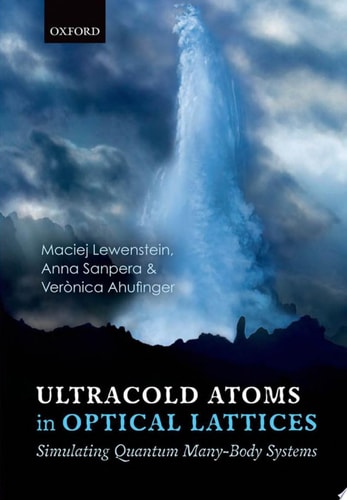
Ultracold Atoms in Optical Lattices: Simulating Quantum Many-Body Systems
0
0
As an Amazon Associate and affiliate partner, Menrva Books earns from qualifying purchases. Learn more
Author Description
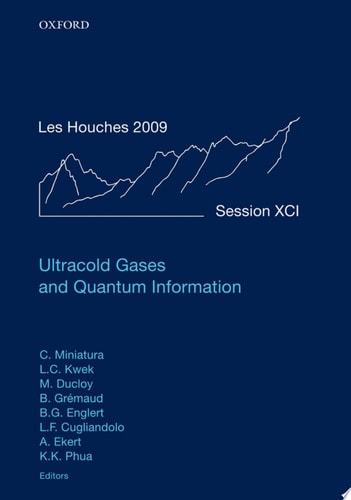
Quantum computers, though not yet available on the market, will revolutionize the future of information processing. Quantum computers for special purposes like quantum simulators are already within reach. The physics of ultracold atoms, ions and molecules offer unprecedented possibilities of control of quantum many body systems and novel possibilities of applications to quantum information processing and quantum metrology. Particularly fascinating is the possibility of using ultracold atoms in lattices to simulate condensed matter or even high energy physics.This book provides a complete and comprehensive overview of ultracold lattice gases as quantum simulators. It opens up an interdisciplinary field involving atomic, molecular and optical physics, quantum optics, quantum information, condensed matter and high energy physics. The book includes some introductory chapters on basic concepts and methods, and then focuses on the physics of spinor, dipolar, disordered, and frustrated lattice gases. It reviews in detail the physics of artificial lattice gauge fields with ultracold gases. The last part of the book covers simulators of quantum computers. After a brief course in quantum information theory, the implementations of quantum computation with ultracold gases are discussed, as well as our current understanding of condensed matter from a quantum information perspective.
Menrva's Summary
THE THESIS
This text investigates the potential of ultracold atoms in optical lattices to function as high-precision quantum simulators for complex many-body systems. The authors, experts in atomic, molecular, and optical physics, synthesize current research to demonstrate how these systems bridge the gap between theoretical quantum information processing and practical applications in condensed matter and high-energy physics. By establishing a framework that connects basic concepts to advanced lattice gas dynamics, the book provides a rigorous foundation for understanding how controlled quantum environments can model physical phenomena that are otherwise inaccessible.
THE SCOPE MAP
What You Will Find
- Comprehensive analysis of spinor, dipolar, disordered, and frustrated lattice gases.
- Detailed review of artificial lattice gauge fields within ultracold gas systems.
- Methodological introduction to quantum information theory and its application to condensed matter.
- Technical exploration of quantum computation implementations using ultracold gases.
THE AUTHORITY PERSPECTIVE
Experts recognize this work as a foundational text for researchers and graduate students entering the interdisciplinary field of quantum simulation. Readers frequently note the high level of technical density, which serves as a comprehensive reference for those already familiar with the core principles of quantum optics and many-body physics.
Page Count:
496
Publication Date:
2012-05-04
Publisher:
Oxford University Press
ISBN-10:
0199573123
ISBN-13:
9780199573127
Low temperatures
Physics
Condensed Matter Physics
Kindle eBooks
Atomic Physics
Kindle Store
Molecular Physics
Optics
Solid-State Physics
Nuclear Physics
Categories