Commentary on Silius Italicus, Punica 7
0
0
As an Amazon Associate and affiliate partner, Menrva Books earns from qualifying purchases. Learn more
Author Description
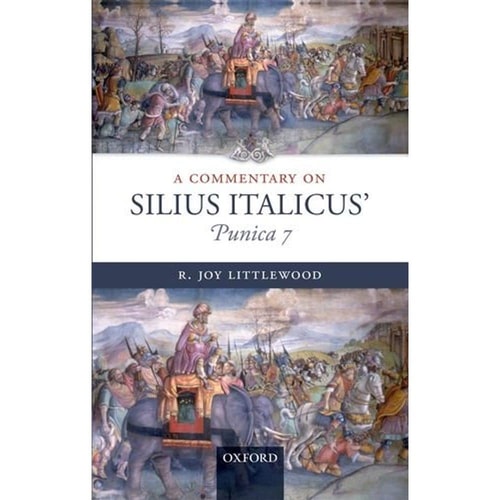
Once stigmatized as 'the worst epic ever written', Silius Italicus' Punica is now the focus of a resurgence of critical interest and wide-ranging positive reappraisal. In a climate of flourishing interest in Flavian literary culture, Punica 7 now joins the rising number of commentaries on Flavian epic. While offering an insightful analysis of Silius' complex intertextuality, Littlewood demonstrates how his republican theme bears the imprint of Rome's more recent experience of civil conflict and the military and civic ethos of the Flavians, and illuminates the poet's engagement with luxuria, exploring tensions within the literary and political culture of the Age of Domitian. The narrative of Punica 7 is a tale of treachery and perseverance, of a battle of wills and the desecration of the Italian land, which is poetically interpreted through intertextual allusion to Virgil's Georgics. In the centre of the book Hannibal commits the anti-pastoral atrocity of igniting 2000 Roman ploughing oxen to simulate a nocturnal raid based on Homer's Doloneia. The burning flesh of this subverted sacrifice, interwoven with imagery evoking bacchanal madness and the rising smoke of the sack of Troy, sets the stage for a dramatic finale in which Rome's traditional virtues triumph over oriental guile and internal discord. This penetrating study explores how the historical narrative coalesces with mythology, the proto-history of Rome, and the genealogy of its protagonists.Littlewood's volume is the first full English commentary on a book of Silius Italicus' Punica and is supported by an extended introduction covering Silius' life, his literary models, the characterization of his protagonists, Fabius and Hannibal, his epic style, and the transmission of the text.
Menrva's Summary
THE THESIS
This volume investigates the literary and political significance of Book 7 of Silius Italicus' Punica, re-evaluating the text within the context of Flavian epic and Roman cultural history. R. Joy Littlewood, a scholar of Latin literature, provides a comprehensive analysis that bridges the gap between the poem's historical narrative and its complex intertextual layers. By examining the interplay between republican themes and the political climate of the Age of Domitian, the author argues that Silius' work reflects deeper tensions regarding Roman identity, military ethos, and the influence of earlier literary models like Virgil and Homer.
THE SCOPE MAP
What You Will Find
- A detailed line-by-line commentary on the Latin text of Punica 7.
- Analysis of intertextual allusions to Virgil's Georgics and Homer's Iliad.
- Examination of the thematic role of luxuria and civil conflict in Flavian literature.
- An extended introduction covering the poet's life, epic style, and the transmission of the manuscript.
THE AUTHORITY PERSPECTIVE
Scholars recognize this work as the first full-length English commentary on a book of the Punica, filling a significant gap in classical scholarship. Experts highlight the text as a foundational resource for those studying Flavian epic and the reception of earlier Roman literary traditions.
Page Count:
384
Publication Date:
2011-10-15
Publisher:
Oxford University Press
ISBN-10:
0199570930
ISBN-13:
9780199570935
Poetry
Literary Criticism
Criticism history
Epic
Ancient History