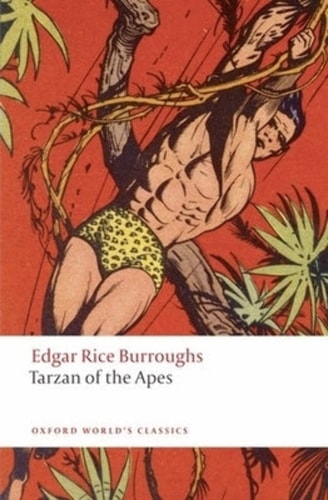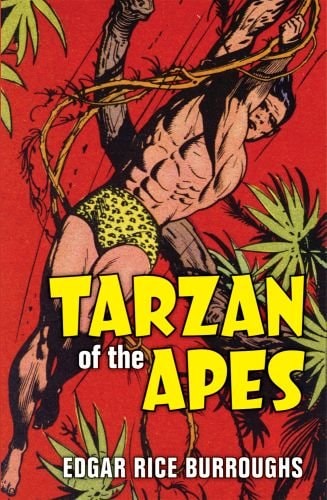
Tarzan of the Apes
0
0
As an Amazon Associate and affiliate partner, Menrva Books earns from qualifying purchases. Learn more
Author Description
Tarzan first came swinging through the jungle in the pages of a pulp-fiction magazine in 1912, and subsequently in the novel that went on to spawn numerous film and other adaptations. In its pages we find Tarzan's origins: how he is orphaned after his parents are marooned and killed on the coast of West Africa, and is adopted by an ape-mother. He grows up to become a model of physical strength and natural prowess, and eventually leader of his tribe. When he encounters a group of white Europeans, and rescues Jane Porter from a marauding ape, he finds love, and must choose between the values of the jungle and civilization.The Tarzan of popular imagination bears only limited resemblance to Edgar Rice Burroughs's creation, and the complex backdrop of colonial appropriation, literary heritage, and nostalgic yearning from which he emerged. This new edition considers these contexts, as well as the enduring appeal of the King of the Apes.
Menrva's Summary
THE PULSE
After being orphaned in the African jungle, a young boy raised by apes must navigate the conflict between his primal upbringing and the sudden intrusion of his own human heritage.
Tarzan, the son of marooned British aristocrats, is adopted by a great ape and matures into a formidable protector of his tribe. His objective is to reconcile his savage physical prowess with the discovery of his true identity when he encounters a group of stranded Europeans. The narrative follows his development from a feral youth to a man caught between the raw laws of the jungle and the complex social expectations of civilization. The story is presented through a third-person perspective that emphasizes the contrast between natural instinct and human intellect.
INSIDE THE PAGES
- Exploration of the nature versus nurture debate through the protagonist's dual identity.
- Vivid descriptions of the African jungle environment and its predatory hierarchy.
- The development of a unique language and communication system between species.
- A central romantic subplot involving the rescue and courtship of Jane Porter.
- Themes of colonial identity and the perceived superiority of civilized society.
- Physical challenges that test the protagonist's strength and survival skills.
- The use of pulp-fiction pacing to maintain high-stakes action sequences.
- A narrative structure that balances origin story with social commentary.
THE COLLECTIVE ECHO
Readers frequently highlight the contrast between the visceral action of the jungle and the protagonist's internal struggle for belonging. Discussion often centers on the colonial undertones present in the text and how they reflect the era of the book's original publication. Critics often examine the influence of the work on the adventure genre and its role in establishing the archetype of the feral child. The pacing is noted for its rapid progression, which prioritizes physical feats and environmental hazards over deep psychological introspection. Many readers find the juxtaposition of primitive survival and Victorian social values to be the most compelling aspect of the narrative.
Page Count:
320
Publication Date:
2010-04-15
Publisher:
Oxford University Press
ISBN-10:
0199587035
ISBN-13:
9780199587032
Adventure
Romance
Action
Adventure fiction
Jungle
classic
Community Tags
Similar Books