The Hidden Hand
0
0
As an Amazon Associate and affiliate partner, Menrva Books earns from qualifying purchases. Learn more
Author Description
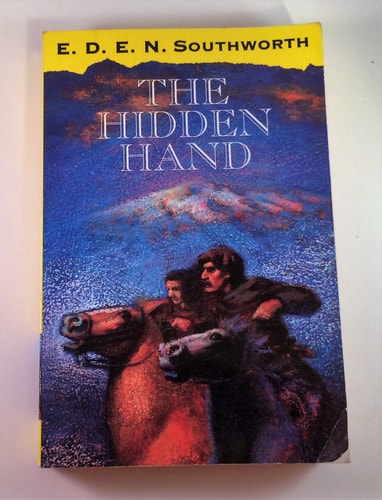
The Hidden Hand (1888) is an exuberant action comedy, featuring fearless Capitola Black, a self-styled female Don Quixote, and the prototype of innumerable adventure heroines.Rescued from life on the streets in New York by a southern plantation owner, with his own reasons for befriending her, Capitola is too active and adventurous to settle for the life of a southern belle. Besides, the neighbourhood is infested with evil-doers--Black Donald, the notorious bandit, and Gabriel Le Noir, the owner of the plantation adjoining--combine to make her life full of excitement and peril.Serialized three times by popular demand before appearing in book form, The Hidden Hand exudes irresistible high spirits and cheer, and still retains the capacity to surprise and delight that enchanted its first readers.
Menrva's Summary
THE PULSE
Capitola Black, a spirited orphan rescued from the streets of New York, must navigate the perils of a southern plantation while thwarting the schemes of local villains. After being taken in by a plantation owner, Capitola rejects the restrictive expectations of nineteenth-century southern society in favor of active, often dangerous pursuits. She faces direct opposition from the notorious bandit Black Donald and the sinister neighbor Gabriel Le Noir, both of whom threaten her safety and the stability of her new home. The narrative follows a fast-paced, episodic structure that emphasizes the protagonist's resourcefulness and physical courage in the face of escalating threats. The story functions as a blend of social commentary and high-stakes adventure, utilizing a third-person perspective to track Capitola's various escapades.
INSIDE THE PAGES
- Protagonist characterized by independence and non-conformity
- Frequent use of cliffhangers and serialized narrative pacing
- Incorporation of gothic elements within a domestic setting
- Satirical take on the traditional southern belle archetype
- High-energy dialogue and comedic situational irony
- Exploration of class dynamics and social mobility
- Inclusion of villainous archetypes such as the bandit and the corrupt landowner
- Focus on physical action and external conflict over internal monologue
THE COLLECTIVE ECHO
Readers and critics often identify this work as a significant example of nineteenth-century popular fiction that prioritizes entertainment and momentum. Discussion frequently centers on the character of Capitola Black, who is viewed as a precursor to modern action-oriented heroines due to her refusal to adhere to gendered social norms. The pacing is noted for its episodic nature, which reflects its origins as a serialized publication designed to maintain high audience engagement. Critics highlight the balance between the darker gothic elements of the plot and the overall lighthearted, exuberant tone of the writing. Many readers appreciate the book for its historical context and its ability to maintain a sense of surprise throughout the narrative.
Page Count:
464
Publication Date:
1997-09-11
Publisher:
Oxford University Press
ISBN-10:
0192832530
ISBN-13:
9780192832535
Adventure
Adventure fiction
Gothic
Comedy
United States
Victorian
classic
Historical
Community Tags
Similar Books