Go Down, Moses
0
0
As an Amazon Associate and affiliate partner, Menrva Books earns from qualifying purchases. Learn more
Author Description
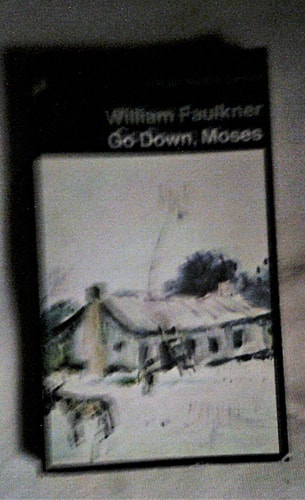
Go Down, Moses is one of William Faulkner's most direct and powerful assessments of race relations in America. In this compelling study, Arthur F. Kinney asserts that it is also his most personal - and perhaps most important - novel. Composed of seven complete stories spanning several generations in Faulkner's fictitious Yoknapatawpha County, Mississippi, the book's structure is deceptively simple. Indeed, Faulkner's publisher incorrectly printed the first edition with the title Go Down, Moses and Other Stories, until Faulkner insisted that the work be treated as a novel. Together, the stories' multiple viewpoints create a complex mosaic of the McCaslin family, whose white and mulatto branches are the product of several defining instances of miscegenation. The illicit mixing of races creates a repeating pattern of ambiguous and morally compromised relationships in which master and slave can be blood relatives, leaving later generations to struggle against a legacy of exploitation that sears the psyches - and the landscape - of the American South. The book's longest episode, "The Bear," which in altered form has become one of Faulkner's best-known short works, poignantly demonstrates how the dehumanizing effects of ownership also alienate people from nature and ultimately from themselves. A radical departure in form and content from the nostalgic plantation novels once common in southern fiction, Go Down, Moses provides an honest and penetrating appraisal of the slave economy and racial domination from the plantation era to the dawn of the civil rights movement. Kinney presents numerous historical documents and offers concrete details from Faulkner's life that show how Faulkner accurately re-created his region's history in his fiction. Kinney also reviews evidence suggesting that Faulkner's own ancestors may have provided the model for the McCaslin's miscegenation. A chronology uniting the novel's seven stories into a single sequence of events provides evidence
Menrva's Summary
THE PULSE
The legacy of miscegenation and exploitation in the American South fuels the central conflict of Faulkner's novel, Go Down, Moses. The narrative follows the intertwined lives of the McCaslin family across generations in the fictional Yoknapatawpha County, exploring the morally compromised relationships born from racial mixing. The protagonist's objective, though not explicitly stated for a single character, is to navigate and confront the deeply ingrained patterns of exploitation and its psychological and environmental scars. The primary forces opposing them are the historical weight of slavery, the pervasive societal racism, and the internal struggles stemming from ambiguous familial ties, all set within the physical and social landscape of the post-plantation South.
INSIDE THE PAGES
- Composed of seven interconnected stories that collectively form a novel.
- Explores the McCaslin family, whose lineage includes both white and mulatto branches.
- Examines the consequences of miscegenation and its impact on subsequent generations.
- Features the prominent story 'The Bear,' focusing on themes of ownership, nature, and self-alienation.
- Critiques the slave economy and racial domination from the plantation era through to the Civil Rights movement.
- Utilizes multiple viewpoints to create a complex mosaic of family history and societal issues.
- Provides a departure from nostalgic plantation novels with its direct appraisal of race relations.
THE COLLECTIVE ECHO
Arthur F. Kinney's study asserts that Go Down, Moses is one of William Faulkner's most direct, powerful, personal, and important assessments of race relations in America. The book's structure, comprising seven stories treated as a novel, allows for a complex mosaic of the McCaslin family's history, marked by miscegenation and its enduring legacy. Readers and critics often note the novel's unflinching portrayal of exploitation and its psychological impact, particularly through the extended narrative of 'The Bear.' The work is recognized for its radical departure from traditional Southern fiction, offering a penetrating appraisal of the slave economy and racial domination.
Page Count:
181
Publication Date:
1996-01-01
ISBN-10:
0805783687
Historical Fiction
Literary Fiction
Fiction
American
Race Relations
Southern Gothic