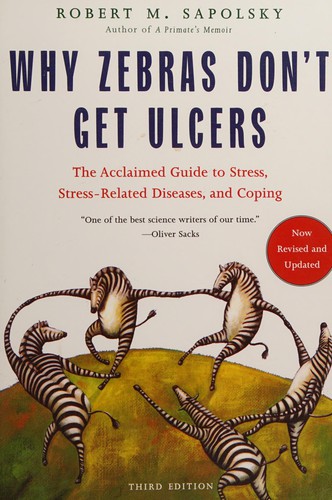
Why Zebras Don't Get Ulcers
0
0
As an Amazon Associate and affiliate partner, Menrva Books earns from qualifying purchases. Learn more
Author Description
Robert Sapolsky's acclaimed Why Zebras Don't Get Ulcers combines cutting-edge research with a healthy dose of good humor and practical advice to explain how prolonged stress causes or intensifies a range of physical and mental afflictions, including depression, ulcers, colitis, heart disease, and more. When we worry or experience stress, our body turns on the same physiological responses that an animal's body does, but we usually do not turn off the stress-response in the same way -- through fighting, fleeing, or other quick actions. Over time, this chronic activation of the stress-response can make us literally sick. This thoroughly updated third edition, which features new chapters on sleep disorders and addictions as well as new sections on gender differences, anxiety, weight gain, post-traumatic stress disorder, and stress management, is richer than ever with insights into how the nervous system responds to stress and how those responses can be controlled. Book jacket.
Menrva's Summary
THE THESIS
This book investigates how chronic stress, a uniquely human affliction, leads to a cascade of physical and psychological ailments. Robert Sapolsky, a neuroendocrinologist, explains that while our bodies possess ancient stress-response mechanisms designed for acute threats, modern humans often fail to disengage these responses, leading to prolonged physiological activation. This chronic stress is implicated in numerous health issues, including depression, cardiovascular disease, and digestive disorders. The third edition incorporates updated research on sleep, addiction, gender differences, anxiety, weight gain, PTSD, and stress management techniques.
THE SCOPE MAP
- Explanation of the physiological mechanisms of the stress response.
- Detailed examination of how chronic stress contributes to specific diseases (ulcers, heart disease, depression, etc.).
- Discussion of the differences in stress response between humans and animals.
- New chapters on sleep disorders and addictions.
- Updated sections on gender differences, anxiety, weight gain, and post-traumatic stress disorder.
- Practical advice and strategies for managing stress.
- Insights into the nervous system's response to stress and methods for control.
THE AUTHORITY PERSPECTIVE
Robert Sapolsky's "Why Zebras Don't Get Ulcers" is widely regarded as a seminal work in the field of stress research, praised for its ability to translate complex scientific findings into accessible prose. Readers and critics alike commend its thoroughness, the author's engaging writing style, and the practical applicability of the information presented. The book effectively bridges the gap between scientific understanding and everyday experience, offering valuable insights into the pervasive impact of stress on health. This updated edition continues to serve as an authoritative yet approachable resource for understanding and managing the effects of chronic stress.
Page Count:
539
Publication Date:
2004-01-01
ISBN-10:
0805073698
Science
Non-Fiction
Health
Psychology
Community Tags
Similar Books