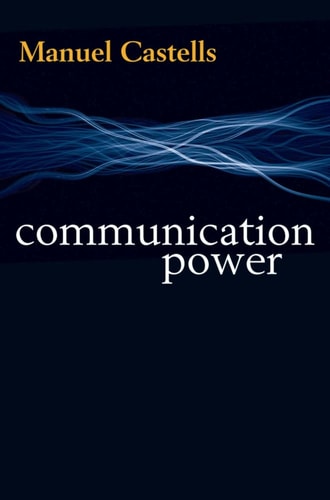
Communication Power
0
0
As an Amazon Associate and affiliate partner, Menrva Books earns from qualifying purchases. Learn more
Author Description
We live in the midst of a revolution in communication technologies that affects the way in which people feel, think, and behave. The media have become the space where power strategies are played out. In the current technological context mass communication goes beyond traditional media and includes the Internet and mobile communication.In this wide-ranging and powerful book, Manuel Castells analyses the transformation of the global media industry by this revolution in communication technologies. He argues that a new communication system, mass self-communication, has emerged, and power relationships have been profoundly modified by the emergence of this new communication environment. Created in the commons of the Internet this communication can be locally based, but globally connected. It is built through messaging, social networks sites, and blogging, and is now being used by the millions around the world who have access to the Internet.Drawing on a wide range of social and psychological theories, Castells presents original research on political processes and social movements. He applies this analysis to numerous recent events--the misinformation of the American public on the Iraq War, the global environmental movement to prevent climate change, the control of information in China and Russia, Barak Obama's internet-based presidential campaigns, and (in this new edition) responses to recent political and economic crises such as the Arab Spring and the Occupy movement. On the basis of these case studies he proposes a new theory of power in the information age based on the management of communication networksJustly celebrated for his analysis of the network society, Castells here builds on that work, offering a well grounded and immensely challenging picture of communication and power in the 21st century. This is a book for anyone who wants to understand the dynamics and character of the modern world.
Menrva's Summary
THE THESIS
How do contemporary communication technologies and the rise of mass self-communication fundamentally restructure power dynamics in the 21st century? Manuel Castells, a prominent sociologist, utilizes his extensive background in network theory to examine the intersection of digital media and political influence. He argues that the shift from traditional mass media to decentralized, internet-based communication systems has created a new environment where power is managed through the control of information networks. By synthesizing social and psychological theories, Castells provides a framework for understanding how these digital architectures shape global political processes and social movements.
THE SCOPE MAP
What You Will Find
- Analysis of the transition from traditional media to mass self-communication via the internet and mobile technology.
- Theoretical framework for power dynamics within the network society.
- Case studies including the Iraq War, the Arab Spring, the Occupy movement, and presidential campaign strategies.
- Examination of information control and censorship in global political contexts such as China and Russia.
THE AUTHORITY PERSPECTIVE
Scholars and students of sociology frequently cite this work as a foundational text for understanding the digital age's political landscape. Readers often note the academic density of the prose, which requires a strong grasp of social theory to fully synthesize the author's arguments.
Page Count:
571
Publication Date:
2011-04-30
Publisher:
Oxford University Press
ISBN-10:
0199595690
ISBN-13:
9780199595693
Information Management
Power Social sciences
Communication
Social Theory
Communication Studies
Mass media
Media Studies
Globalization
Communication Technology
Technology
MIS
Sociology
Community Tags
Other Editions(6)



Similar Books






Reader Comments
Share Your Thoughts
No comments yet. Be the first to share your thoughts!