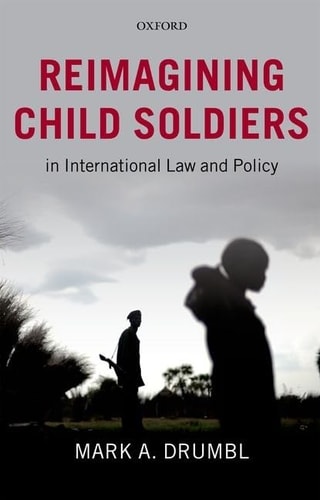
Reimagining Child Soldiers in International Law and Policy
0
0
As an Amazon Associate and affiliate partner, Menrva Books earns from qualifying purchases. Learn more
Author Description
The international community's efforts to halt child soldiering have yielded some successes. But this pernicious practice persists. It may shift locally, but it endures globally. Preventative measures therefore remain inadequate. Former child soldiers experience challenges readjusting to civilian life. Reintegration is complex and eventful. The homecoming is only the beginning. Reconciliation within communities afflicted by violence committed by and against child soldiers is incomplete. Shortfalls linger on the restorative front.The international community strives to eradicate the scourge of child soldiering. Mostly, though, these efforts replay the same narratives and circulate the same assumptions. Current humanitarian discourse sees child soldiers as passive victims, tools of war, vulnerable, psychologically devastated, and not responsible for their violent acts. This perception has come to suffuse international law and policy. Although reflecting much of the lives of child soldiers, this portrayal also omits critical aspects. This book pursues an alternate path by reimagining the child soldier. It approaches child soldiers with a more nuanced and less judgmental mind.This book takes a second look at these efforts. It aspires to refresh law and policy so as to improve preventative, restorative, and remedial initiatives while also vivifying the dignity of youth. Along the way, Drumbl questions central tenets of contemporary humanitarianism and rethinks elements of international criminal justice. This ground-breaking book is essential reading for anyone committed to truly emboldening the rights of the child. It offers a way to think about child soldiers that would invigorate international law, policy, and best practices. Where does this reimagination lead? Not toward retributive criminal trials, but instead toward restorative forms of justice. Toward forgiveness instead of excuse, thereby facilitating reintegration and promoting social repair within afflicted communities. Toward a better understanding of child soldiering, without which the practice cannot be ended. This book also offers fresh thinking on related issues, ranging from juvenile justice, to humanitarian interventions, to the universality of human rights, to the role of law in responding to mass atrocity.
Menrva's Summary
THE THESIS
This book investigates the limitations of current international legal and policy frameworks regarding child soldiers, questioning whether existing humanitarian narratives adequately address the complexities of their experiences. Mark A. Drumbl, a scholar in international criminal law, utilizes a critical analysis of global humanitarian discourse to challenge the prevailing view of child soldiers as merely passive, psychologically damaged victims. He argues that these rigid assumptions hinder effective prevention and reintegration, proposing instead a shift toward restorative justice models that emphasize youth agency and social repair.
THE SCOPE MAP
What You Will Find
- Critical evaluation of international criminal justice and humanitarian policy
- Analysis of the reintegration challenges faced by former child soldiers
- Examination of the tension between retributive justice and restorative social repair
- Theoretical framework for reimagining youth agency within conflict zones
THE AUTHORITY PERSPECTIVE
Experts recognize this work as a significant contribution to the field of international law, particularly for its departure from standard victim-centric narratives. Scholars frequently note the academic rigor and the provocative nature of Drumbl's arguments regarding the necessity of restorative justice in post-conflict societies.
Page Count:
254
Publication Date:
2012-04-15
Publisher:
Oxford University Press, USA
ISBN-10:
0199592667
ISBN-13:
9780199592661
Sociology
Child soldiers
Warfare
Soldiers
Human rights
International Law
Community Tags
Other Editions(5)



Similar Books









Reader Comments
Share Your Thoughts
No comments yet. Be the first to share your thoughts!